
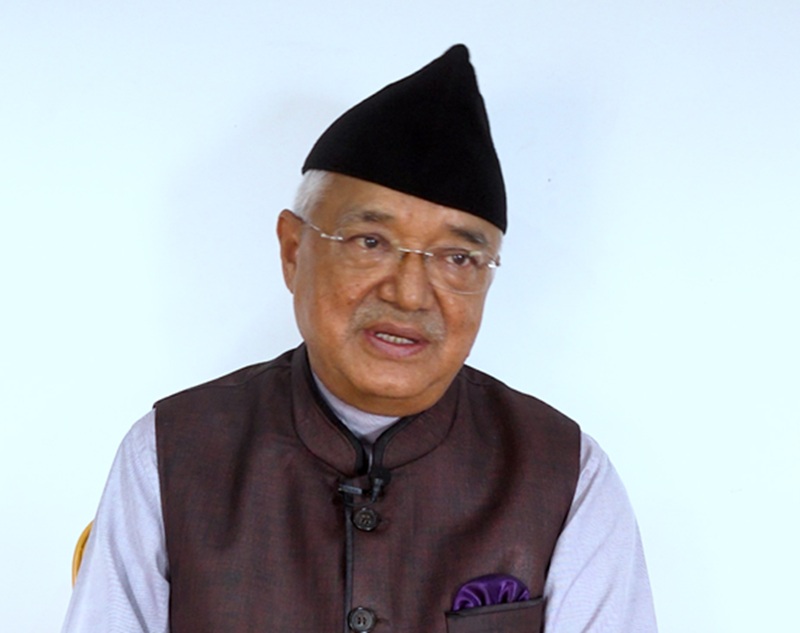
Gaijatra Predates King Pratap Malla: Cultural Expert Dr. Govinda Tandon on Its Evolution and Social Significance

29th August 2026, Kathmandu
Cultural expert Dr. Govinda Tandon reveals that Gaijatra dates back further than King Pratap Malla’s reign. Explore the historical roots, social satire, and cultural significance of this unique festival.
Gaijatra Predates King Pratap Malla
The popular belief that the Gaijatra festival originated during the reign of King Pratap Malla is historically incomplete, according to renowned culture expert Dr. Govinda Tandon.
Citing the Gopalraj Bansawali, which mentions Gaijatra (known as Sayat) as early as Nepal Sambat 503–504, Dr. Tandon points out that this cultural tradition was already well-established long before Pratap Malla’s time. In a conversation with Nepal News Bank, he explored the profound cultural, religious, and historical dimensions of Gaijatra and the traditional Lakhé dance.

1. Historical Roots: Beyond the Legend of Pratap Malla
While 19th-century language chronicles (Bhasha Bansawali) suggest that Gaijatra began after the death of King Pratap Malla’s son, Chakrapatendra Malla, to console the grieving queen, Dr. Tandon states this is not the final historical truth.
The Oldest Written Evidence: The Gopalraj Bansawali remains the oldest available written proof predating Pratap Malla.
Lichchhavi Era Findings: Although over 200 inscriptions from the Lichchhavi period do not explicitly mention Gaijatra as a festival, the deep reverence for cows, Nandi, and Kamdhenu was widely prevalent in sculptures, coins, and inscriptions.
2. A Festival of Memorial, Satire, and Social Mirror
Gaijatra is fundamentally a memorial festival associated with death. Families who have lost a relative within the past year participate in the procession, traditionally leading a cow or a symbolic representation of one—particularly within the Newar Hindu community of the Kathmandu Valley.
Collective Healing: The ritual helps transform individual grief into shared remembrance and social participation, traditionally believed to help the departed soul easily cross the mythical Vaitarani river.
Advertisement

The City’s Mirror: Beyond religious faith, Gaijatra historically served as Kathmandu’s news bulletin and social commentary. Processions carried the news of the town—detailing who passed away, political events, and critiquing the flaws of everyone from commoners to rulers through caricatures and satire.
Regional Variations: Gaijatra is celebrated differently across regions like Kathmandu, Bhaktapur, Patan, Kirtipur, and Banepa. While Kathmandu historically featured decorated cows or calves, Bhaktapur uses portraits of the deceased, and Devpatan showcases humorous and theatrical character performances.
3. Shifting Roles in the Modern Era
In the past, when modern communication and entertainment media were scarce, festivals were the primary channels for public entertainment and information flow. Processions stopping at public squares like Hanuman Dhoka or Patan served as major hubs for community updates.
Decline of Traditional Roles: With the massive expansion of communication channels and media, the old social and informational role of Gaijatra has gradually weakened. Today, satirical magazines and performances are no longer confined to a single annual event, prompting a shift in public perception.
Core Spirit Remains: Despite changing forms, Dr. Tandon emphasizes that the essence of Gaijatra—memorializing the departed, fostering community participation, and holding up a satirical mirror to society—remains vital.
4. The Lakhé Dance: Awakening Curiosity in Children
The traditional Lakhé dance, a prominent feature of Kathmandu Valley’s festivals, blends entertainment with a deep sense of mystery for children.
Cultural Impact: Sporting long hair and fearsome masks, the Lakhé character often serves playfully as a familiar figure parents use to discipline or amuse children (e.g., “Eat your meal, or the Lakhé will come”).
Fostering Inquisitiveness: Because children do not initially realize a human is inside the elaborate costume, the Lakhé sparks a sense of wonder about otherworldly realms, encouraging young minds to question, explore, and learn about their cultural heritage.
For more: Gaijatra Predates King Pratap Malla