
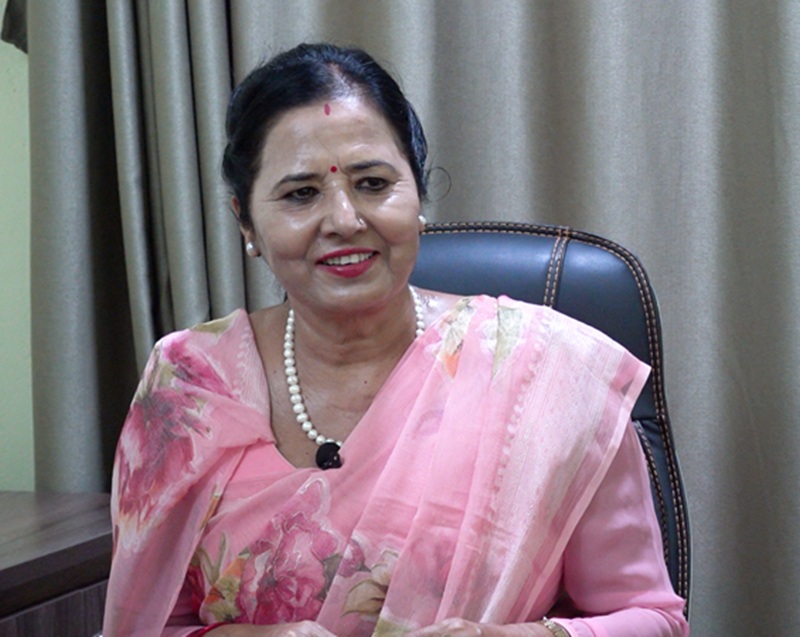
Gen Z Movement Nepal: Dr. Dila Sangroula Criticizes Balen Government

8th September 2026, Kathmandu
One year after the historic Gen Z movement of Bhadra 23–24 reshaped Nepal’s political landscape, public expectations remain unfulfilled under the leadership of Prime Minister Balendra Shah. Speaking in an interview with Nepal ICT FRAME MAGAZINE, Nepali Congress (NC) Joint General Secretary Dr. Dila Sangroula leveled serious criticisms against the current administration, accusing it of failing to deliver on good governance, anti-corruption mandates, and essential public services.
Gen Z Movement Nepal

Unaddressed Atrocities and Stalled Investigations
A central pillar of Dr. Sangroula’s critique focuses on the state’s failure to conduct an impartial investigation into the events surrounding the uprising:
Bhadra 23 Police Crackdown: Demands from the families of injured protesters and martyrs—including young children shot during early demonstrations—remain unaddressed by the state.
Bhadra 24 Vandalism: The government has failed to deliver transparent findings regarding the arson and destruction of key state assets, including the Parliament building, Singha Durbar, and the Supreme Court.
Suppression of Dissent: Despite rising to power on the back of citizen-led protests, the administration continues to use police force and baton charges to silence citizens voicing grievances.
Stagnant Anti-Corruption Reforms and Mismanagement
Dr. Sangroula highlighted that the administration has backed down on bold anti-corruption measures. The Nepali Congress has repeatedly urged a comprehensive asset investigation into all high-ranking public officials holding office since 1990 (2046 BS), alongside reopening major legacy corruption cases. According to Sangroula, the government has shown a complete lack of momentum on these audits.
Advertisement

Furthermore, the government’s response to recent national crises—particularly the Bhote Koshi floods—revealed severe shortcomings in disaster management, rescue operations, and inter-governmental coordination between federal, provincial, and local authorities.
Economic Instability and Continued Youth Migration
Dr. Sangroula expressed deep concern over the state of the economy and the private sector:
Hostile Business Climate: A “detain first, investigate later” stance toward business leaders has severely damaged commercial confidence, discouraging foreign direct investment (FDI) and Non-Resident Nepali (NRN) capital.
Brain Drain: Despite campaign promises pledging that no youth would need to seek employment abroad, overseas migration continues at high rates due to a lack of domestic job creation, quality education, and healthcare infrastructure.
Demand for Parliamentary Accountability
Criticizing Prime Minister Shah’s leadership style, Dr. Sangroula likened his parliamentary presence to an “express train” that avoids legislative oversight and direct questioning from lawmakers.
Following its special general convention under the leadership of Gagan Kumar Thapa, the Nepali Congress has embraced internal transformation. Sangroula emphasized that while the party will support constructive government efforts, it will firmly hold the administration accountable for its governance failures.
For more: Gen Z Movement Nepal


