
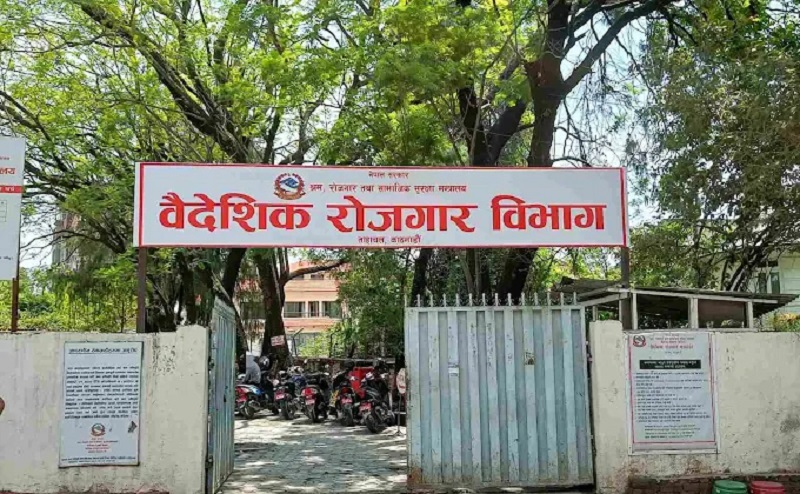
Department of Foreign Employment Mandates Systematic Oversight of Overseas Workers by Recruitment Agencies

19th June 2026, Kathmandu
The Department of Foreign Employment has officially enforced a new directive making it mandatory for all licensed manpower agencies to regularly monitor overseas Nepali workers.
Manpower Agencies Mandated Monitoring
The regulatory update was introduced through an official notice to restructure the accountability of private recruitment firms operating under national migration laws. The policy requires manpower businesses to establish permanent, trackable channels of communication with the personnel they place in international markets. This administrative intervention aims to tackle rising cases of fraud, contract breaches, and unsafe working environments by transforming passive placement agencies into active, long-term worker welfare supervisors.

Comprehensive Summary of the New Monitoring Guidelines and Reporting Timelines
The newly structured labor protection framework introduces fixed monthly evaluation metrics and strict quarterly corporate reporting deadlines.
- Enforcing State Authority: Department of Foreign Employment, Government of Nepal
- Target Corporate Group: All licensed private manpower and recruitment agencies
- Core Regulatory Mandate: Mandatory continuous tracking and welfare monitoring of deployed overseas workers
- Monthly Follow Up Sample Rate: Direct communication with at least 5 to 10 workers from every deployment batch
- Key Information Points: Net salary payments, workplace safety parameters, living accommodation quality, and contract adherence
- Institutional Reporting Interval: Submission of compiled monitoring logs every three months
- Receiving Government Node: Designated Monitoring Branch of the Department of Foreign Employment
- Primary International Assistance Partners: Nepalese embassies and foreign diplomatic missions
Understanding the Systemic Grievances Driving Post Departure Oversight Reforms
The central labor department structured these strict tracking procedures in response to a heavy influx of complaints from migrant workers.
Historically, thousands of workers traveling to major destination markets faced immediate contract substitution upon arrival, receiving lower salaries or different job roles than initially promised in their signed documents. The department call center and the government-wide Hello Sarkar portal have registered numerous grievances involving delayed salary payments, unhygienic or crowded labor camp housing, and explicit violations of basic human rights. By forcing manpower agencies to run regular checks on their active worker cohorts, the state aims to catch these corporate abuses early before they escalate into severe labor emergencies.
Advertisement

Immediate Operational Action Items for Private Labor Recruiter Compliance
To satisfy the newly established guidelines, recruitment agencies must build standardized data collection systems into their everyday corporate habits.
Every month, agency managers must pick random samples of five to ten individuals from their historical lot numbers and document their live working experiences. If a worker reports non-payment of wages, illegal passport confiscation, or hazardous operational environments, the manpower firm must instantly contact the international employer to fix the issues.
Furthermore, agencies are now legally required to submit comprehensive, standardized compliance reports to the state monitoring branch every three months. Manpower companies that ignore these monthly data collections or fail to file their quarterly summaries on time will face severe regulatory penalties, including immediate license suspensions and blacklisting.
Enhancing Pre Departure Literacy and Coordination With Diplomatic Missions
The state directive also updates the operational rules for pre-departure orientation programs managed by local recruiters.
Before sending citizens abroad, manpower companies must ensure that every candidate is fully educated on their contract terms, local labor laws, and the official grievance procedures available in their destination country. If a severe workplace dispute occurs that a private agency cannot resolve alone, the firm must quickly escalate the case to the nearest Nepalese embassy or consulate. This combined setup ensures that stranded or abused workers can access emergency rescue, direct legal advice, and fair repatriation compensation through coordinated public-private channels.
For More: Manpower Agencies Mandated Monitoring


