
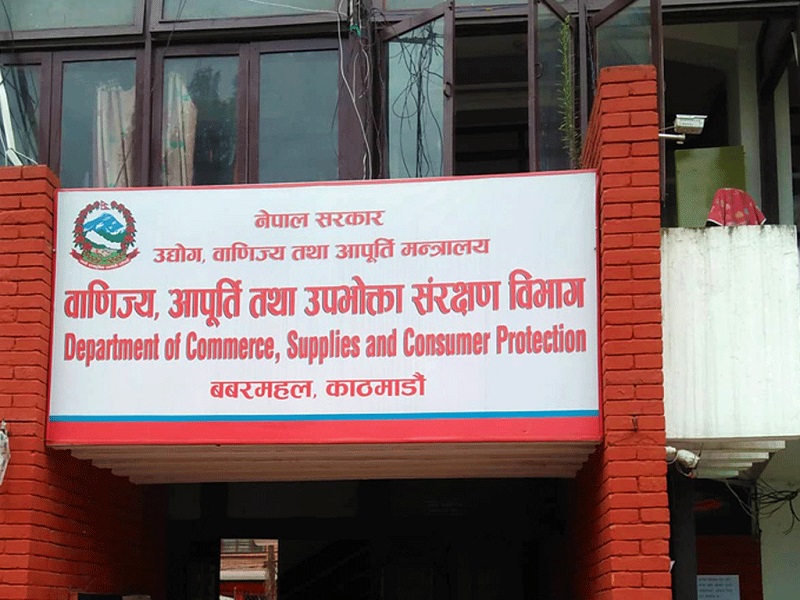
Market Monitoring Firm Penalty Issued by Commerce Department

11th March 2026, Kathmandu
The Department of Commerce, Supplies and Consumer Protection has intensified its oversight of the retail sector, recently imposing financial penalties on businesses found in violation of national standards.
Market Monitoring Firm Penalty
As part of a concentrated market monitoring campaign aimed at ensuring compliance with the Consumer Protection Act 2018, inspectors visited 13 firms in a single day. The resulting actions—which included fines for two businesses and mandatory improvement directives for eleven others—serve as a clear reminder that regulatory adherence is non-negotiable for commercial enterprises operating within the Kathmandu Valley.
Enforcement and Penalties
The two firms penalized during this operation were Sindhu Falful and Fresh Center, which was fined NPR 20,000, and Panchkanya Tridev Dairy Shop, which received a penalty of NPR 10,000. These actions were taken under Section 38 of the Consumer Protection Act 2018, which grants the Department the authority to issue immediate fines for infractions such as:
Inaccurate Labeling: Failure to provide clear information on product origin, expiration dates, or ingredients.
Price Opacity: Absence of mandatory price lists or charging prices above the marked retail price (MRP).
Hygiene and Quality: Failure to meet basic sanitation requirements for food-based businesses, such as dairies and fresh produce centers.
The Improvement Directive Strategy
For the 11 businesses that escaped direct fines, the Department issued formal “improvement orders.” These directives are not merely suggestions but legal mandates that require the firms to rectify operational shortcomings within a specified timeframe. The Department’s focus for these businesses included:
Structural Improvements: Ensuring price lists are prominently displayed at the point of sale.
Product Integrity: Removing expired items from store shelves and ensuring cold-chain maintenance for dairy products.
Advertisement


Transparency: Updating business documentation and licensing records to ensure full legal standing.
Purpose and Impact of Regular Monitoring
The primary objective of these ongoing inspections is to foster a consumer-friendly marketplace. In high-density urban areas, where consumers rely heavily on local retailers for essential daily goods, the risk of market exploitation is significant. Regular monitoring by the Department of Commerce acts as a vital safeguard against:
Unethical Practices: Curbing the sale of low-quality or adulterated goods.
Market Distortions: Preventing artificial price inflation by forcing transparency.
Public Health Risks: Identifying and removing harmful products that could compromise consumer safety.
The involvement of civil society and consumer rights activists in these inspections has further bolstered the credibility of the monitoring process. By integrating third-party oversight, the government ensures that inspectors remain accountable, and the findings reflect the genuine concerns of the public.
Future Outlook for Consumer Protection
Authorities have stated that these inspections are just the beginning of a more rigorous enforcement phase. Businesses that display a pattern of non-compliance—ignoring improvement orders or committing repeated violations—face the possibility of significantly higher fines, temporary license suspension, or permanent closure. The government’s long-term goal is to transition toward a self-regulating market where businesses proactively adhere to quality and price transparency standards.
For the average consumer, these market monitoring efforts are essential in building confidence. As the Department of Commerce continues to expand its reach across different sectors, shoppers are encouraged to remain vigilant, report suspicious activities, and demand proper documentation for all major purchases.
For More: Market Monitoring Firm Penalty