National Assembly Voting Begins Across Seven Provinces

25th January 2026, Kathmandu
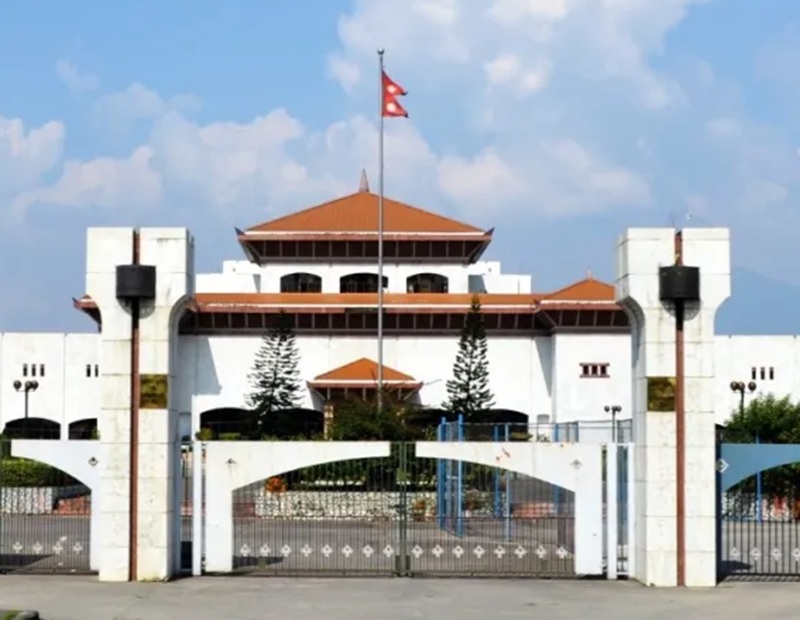
National Assembly voting begins today across all seven provinces of Nepal to fill 17 vacant seats in the upper house of the Federal Parliament. The Election Commission of Nepal has confirmed that the polling stations opened at 9:00 AM on Sunday, January 25, 2026, and will remain active until 3:00 PM. This high-stakes election is set to complete the membership of the National Assembly as the terms of 19 members are scheduled to expire on March 4, 2026 (Falgun 20, 2082).
National Assembly Voting
The current vacancies arose because the National Assembly is a permanent body where one-third of its members retire every two years. Of the 19 seats coming open, 17 are being contested today through an indirect voting process. One seat in Koshi Province has already been filled uncontested by Sunil Bahadur Thapa of the Nepali Congress, and the final seat will be filled through a presidential nomination based on the recommendation of the Council of Ministers.
Polling Centers Across the Seven Provinces
To facilitate a smooth election, the Election Commission has established designated polling centers in the provincial capitals. The specific locations for the National Assembly voting are as follows:
Koshi Province: Provincial Election Office, Biratnagar, Morang.
Madhesh Province: Mahendra Narayan Nidhi Mithila Cultural Center, Janakpurdham, Dhanusha.
Bagmati Province: Bhutan Devi Secondary School, Hetauda, Makwanpur.
Gandaki Province: Provincial Election Office, Pokhara, Kaski.
Lumbini Province: Employees’ Meeting Center, Ghorahi, Dang.
Karnali Province: Provincial Election Office, Birendranagar, Surkhet.
Sudurpaschim Province: Provincial Election Office, Dhangadhi, Kailali.
Advertisement


The Weighted Voting System Explained
The National Assembly is elected by an electoral college consisting of members of the provincial assemblies and the heads (Mayors/Chairpersons) and deputy heads (Deputy Mayors/Vice-Chairpersons) of local levels. Under the current legal framework, not all votes are equal; instead, they carry a specific weightage designed to balance the influence of different levels of government.
The weighted values for the 2026 elections are:
Provincial Assembly Members: Each vote carries a weight of 53 points.
Local Level Leaders: Each vote carries a weight of 19 points.
This system ensures that while local leaders have a direct say in the composition of the upper house, the provincial assembly members—who represent larger constituencies—maintain a higher proportional influence. For this election, the final voters’ list includes 545 provincial assembly members and 1,497 local-unit officials, making a total of 2,042 eligible voters nationwide.
Political Context and Seat Categories
The National Assembly voting is organized into specific clusters to ensure diverse representation, including women, Dalits, and persons with disabilities or minorities. In the 2026 race, a total of 43 candidates are vying for the 17 contested seats.
A significant feature of this election is the formation of strategic alliances. The Nepali Congress, CPN-UML, and Janata Samajbadi Party (JSP) have formed an electoral alliance in several provinces, while the Nepali Communist Party (NCP) has fielded candidates for all 17 contested seats. The results will determine the new balance of power in the upper house, which currently plays a vital role in reviewing legislation passed by the House of Representatives and ensuring that the interests of the provinces are represented at the federal level.
Regulatory Oversight and Results Timeline
Election Commission spokesperson Narayan Prasad Bhattarai has highlighted that all security and procedural measures are in place to ensure a transparent voting process. Each center is monitored by election officials and observers from various political parties. Because the electoral college is relatively small compared to a general election, the commission expects to begin the counting process immediately after the polls close at 3:00 PM.
The results are expected to be announced shortly after the counting is finalized in each province. This election serves as a precursor to the upcoming general elections for the House of Representatives scheduled for March 5, 2026, and is a critical test for the political alliances currently governing at both the provincial and federal levels.
Conclusion
In conclusion, the National Assembly voting begins today across all seven provinces marks a pivotal moment for Nepal’s bicameral parliamentary system. By filling these 17 seats, the nation ensures the upper house remains fully functional and constitutionally compliant. With a sophisticated weighted voting system and a focus on inclusive representation, today’s results will shape the legislative landscape of Nepal for the next six years.
For More: National Assembly Voting