
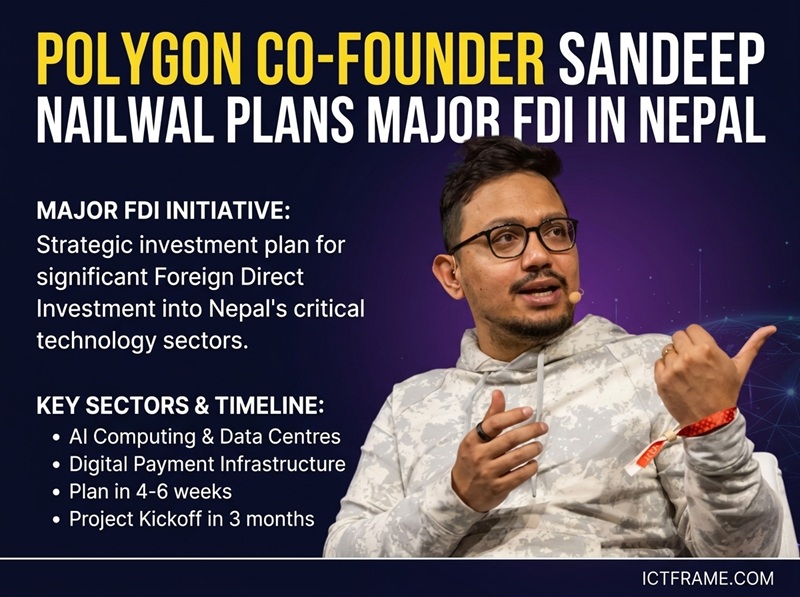
Nepal Could Become the Next Global AI Computing Hub! Polygon Co-Founder Sandeep Nailwal Plans Major FDI

14th November 2026, Kathmandu
Nepal Could Become Next Global AI Computing Hub! Polygon’s Sandeep Nailwal Eyes Major Investment
Nepal could become the next global AI computing hub! In a major development for South Asia’s tech ecosystem, Polygon co-founder Sandeep Nailwal plans to bring foreign investment into Nepal’s AI computing, data centres, and digital payment infrastructure.
Following high-level meetings in Kathmandu with Nepal’s Finance Minister and Nepal Rastra Bank Governor, the executive chairman of Polygon Labs revealed an accelerated roadmap. He aims to prepare an investment plan within 4–6 weeks and begin projects within three months.
Key Highlights of Sandeep Nailwal’s Investment Plan in Nepal

1. Accelerated 3-Month Implementation Timeline
Originally expecting a one-to-two-year timeline to navigate investments in the region, Nailwal accelerated his strategy after productive discussions with Nepali policymakers.
His team will finalize a formal investment blueprint within 4 to 6 weeks and move directly toward project execution within the next three months.
2. Turning Hydropower into AI Data Centres
Nailwal highlighted that Nepal’s abundant green hydropower and favorable climate make it uniquely positioned to capitalize on the global AI boom. Instead of merely exporting raw electricity at low rates, Nepal can convert its clean energy into high-value AI computing services and sell them globally over the internet.
Advertisement

- With data centres facing growing regulatory and energy constraints in the United States and Europe, Nepal offers an attractive green-energy alternative.
-
These AI infrastructure projects could attract hundreds of millions of dollars in foreign direct investment (FDI) while providing local startups with subsidized access to computing power.
3. Major Boost to Nepal’s GDP and Exports
According to Nailwal, building an AI computing and data centre ecosystem could add several percentage points to Nepal’s Gross Domestic Product (GDP) within the next two to five years. Furthermore, exporting computing power could boost Nepal’s national export capacity by 50% to 100% over the same period.
4. Slashing Remittance Costs via Polygon’s Open Money Stack
Nepal receives approximately US$16 billion in annual remittances, with migrant workers losing between 0.5% and 5% in intermediary transfer fees.
Nailwal noted that integrating regulated stablecoin rails and the Polygon Open Money Stack with local banks could cut remittance transaction costs to one-third or one-fourth of current rates—saving millions of dollars for Nepali workers abroad.
5. Regulated Blockchain Innovation Over Speculative Crypto
Expressing full respect for Nepal’s regulatory stance against speculative cryptocurrency trading, Nailwal emphasized that his focus is strictly on regulated financial infrastructure.
To safely harness blockchain technology, he recommended that Nepali authorities explore controlled pilot programs involving the tokenization of government bonds, securities, and local currency (CBDCs).


