Nepal Health Insurance Reform Debate Intensifies

10th February 2026, Kathmandu
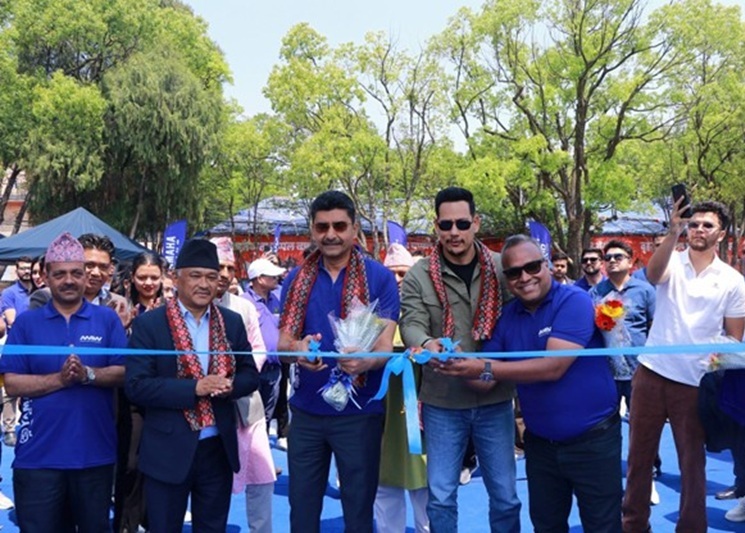
The Nepal Health Insurance Reform has reached a critical crossroad in early 2026, as high-level political figures and healthcare experts warn that the nation’s most ambitious social safety net is on the verge of collapse. Nepali Congress General Secretary and former Health Minister Pradip Paudel recently addressed a public gathering in Kathmandu, asserting that the program—which covers over 10 million citizens—must be prioritized for legislative reform rather than being allowed to phase out
Nepal Health Insurance Reform
His remarks coincide with a severe financial bottleneck that has seen major hospitals, including the Tribhuvan University Teaching Hospital (TUTH), suspend services under the insurance scheme due to billions of rupees in unpaid dues from the government.
The Current Crisis: A Funding Deadlock
As of February 10, 2026, the Health Insurance Board (HIB) is grappling with a massive liability crisis. The gap between the premiums collected and the treatment costs incurred has pushed the system toward bankruptcy.
Mounting Arrears: The Board currently owes more than Rs 14 billion to over 500 health facilities across Nepal.
Service Disruptions: Hospitals like TUTH and Bir Hospital have warned that they cannot sustain operations when the government only reimburses a fraction of their monthly insurance expenses.
The “Outpatient” Slash: In a desperate bid to curb costs, the Board has announced that starting February 13, 2026, outpatient (OPD) coverage will be drastically reduced to Rs 25,000, down from the previous limit of Rs 100,000.
Pradip Paudel’s Vision for Reform
During his tenure as Health Minister (July 2024–September 2025), Pradip Paudel spearheaded a “Reform Suggestion Task Force” that aimed to make the system self-sustaining. His primary argument is that health insurance should operate as a one-door system rather than a scattered welfare program.
The “Rs 1 Trillion” Revenue Strategy
Paudel claims that if the reforms he proposed were fully implemented, the insurance fund could generate significantly higher revenue, potentially up to Rs 1 trillion annually. His strategy includes:
Mandatory Salary Contribution: A proposed 2% deduction from the salaries of all government and private sector employees to be deposited directly into the health fund.
Consolidation of Funds: Merging the various health-related budgets of federal, provincial, and local governments into a single insurance pool.
Dedicated Health Tax: Diverting a percentage of taxes from petrol, diesel, mobile recharge cards, and social responsibility taxes to the Health Insurance Fund.
Advertisement


Expanding Coverage Limits
Under this reformed model, Paudel argues that the treatment ceiling could be raised from the current Rs 100,000 to Rs 500,000 for all citizens, with special provisions of up to Rs 750,000 for impoverished individuals suffering from chronic diseases like cancer or kidney failure.
Legislative Stagnation and Policy Shifts
While the previous administration had prepared a comprehensive reform report, the legislative process stalled following the political shifts that saw Sushila Karki become Prime Minister and Dr. Sudha Sharma Gautam take over as Health Minister in late 2025.
Current debates in the National Assembly revolve around:
Income-Based Premiums: Moving away from a flat fee (currently Rs 3,500 for a family of five) to a progressive system based on household income.
Co-payment Mechanisms: Introducing a small percentage of “out-of-pocket” payment by the insured to prevent the “misuse” of services for minor ailments, which currently accounts for 71% of all claims.
Legal Authentication: Implementing stricter anti-fraud measures and digital verification to prevent hospitals from submitting false or inflated claims.
Broader Legislative Record in Kathmandu-5
Beyond healthcare, Paudel has used his platform to highlight his legislative and infrastructure contributions to his constituency, Kathmandu-5. These include:
Ring Road Expansion: Pushing for the next phase of construction toward Basundhara and Maharajgunj.
Public Interest Bills: He remains one of the few lawmakers to introduce a “private bill” and multiple public importance motions aimed at land protection and the Melamchi water distribution system.
Preventive Care: During his ministry, he launched a campaign to vaccinate 1.5 million adolescent girls against cervical cancer, an initiative he considers a cornerstone of preventive health equity.
Conclusion
The future of Nepal Health Insurance Reform depends on whether the government can bridge the Rs 14 billion funding gap before the March 2026 elections. While political leaders like Pradip Paudel advocate for a high-revenue, high-coverage model, the immediate reality for citizens is a shrinking outpatient ceiling and increasing hospital closures. If the “Rs 1 trillion” reform model remains a theory on paper while hospitals stop taking insurance cards, Nepal risks a total collapse of its universal health coverage goals.
For More: Nepal Health Insurance Reform