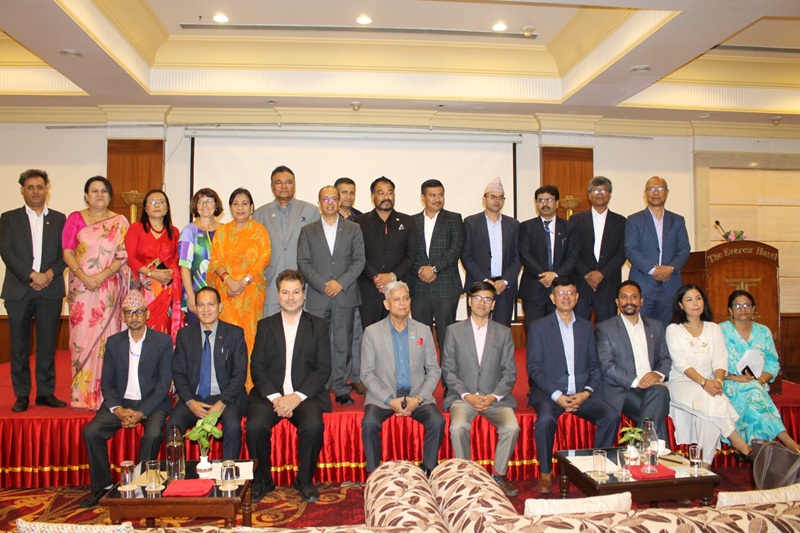
Nepal Private Sector Launches TVET Industry Council (TIC) to Bridge Skill Gap

27th August 2026, Kathmandu
Five leading Nepalese private sector bodies, including CNI, FCAN, and HAN, have launched the TVET Industry Council (TIC) to bridge the national skill gap. Discover how TIC aligns technical education with market demand, advocates for vocational policy reform, and drives industry-led apprenticeship programs across Nepal.
Nepal Private Sector Launches TVET Industry Council
The initiative brings together the Confederation of Nepalese Industries (CNI), the Federation of Contractors’ Associations of Nepal (FCAN), the Federation of Nepal Cottage and Small Industries (FNCSI), the Federation of Women Entrepreneurs’ Association of Nepal (FWEAN), and the Hotel Association Nepal (HAN). Registered as an official entity with the Company Registrar’s Office, TIC will serve as a permanent bridge between the government, industries, training providers, and academic institutions.
Core Objectives of the TVET Industry Council
Demand-Driven Skill Training: Develop market-aligned curricula, industry-focused certifications, and workplace apprenticeships based on current labor requirements.
Policy Advocacy: Drive private-sector-led policy recommendations to strengthen governance in Nepal’s vocational training system.
Multi-Stakeholder Collaboration: Facilitate partnerships among federal, provincial, and local governments, CTEVT, NAVT, universities, and development partners.
Labor Market Intelligence: Conduct ongoing research to identify emerging technical skill shortages and future employment opportunities.
Advertisement

Addressing Structural Challenges in Nepal’s Labor Market: Nepal’s vocational ecosystem currently struggles with a persistent mismatch between available training programs and actual enterprise needs. Limited industry involvement in curriculum development, weak coordination between training centers and businesses, and a lack of workplace-based learning opportunities have long limited workforce productivity. TIC intends to solve these issues by funneling real-time employer data back into educational policy and training design.
Governance and Executive Leadership
Board Composition: The council operates under an 11-member Board of Directors that includes labor market experts and industry leaders.
Rotational Leadership: Executive leadership will rotate among the five founding member organizations every two years.
Inaugural Presidency: The Confederation of Nepalese Industries (CNI) holds the founding leadership position for the initial term.
Membership Expansion: While established by five founding associations, TIC will progressively onboard additional private-sector representation bodies.
For more: Nepal Private Sector Launches TVET Industry Council