Paropakar Maternity Hospital Expands Digital Systems & IVF Services | Dr. Shree Prasad Adhikari

25th September 2026, Kathmandu
Explore how Paropakar Maternity and Women’s Hospital (Prasuti Griha) is expanding digital healthcare, lowering IVF costs, and tackling infrastructure challenges.
Paropakar Maternity and Women’s Hospital (Prasuti Griha) in Kathmandu is expanding digital healthcare with SMS lab reports, AI info systems, and digital queuing. Hospital Director Dr. Shree Prasad Adhikari details efforts to lower IVF costs, establish central registry laws, and address infrastructure, parking, and permanent staffing challenges.
Paropakar Maternity Expands Digital Systems
Digital Transformation and IVF Expansion at Paropakar Maternity Hospital: Innovations and Structural Challenges
Paropakar Maternity and Women’s Hospital (Prasuti Griha), Nepal’s premier government obstetrics and gynecology institution, is executing a comprehensive service modernization campaign.
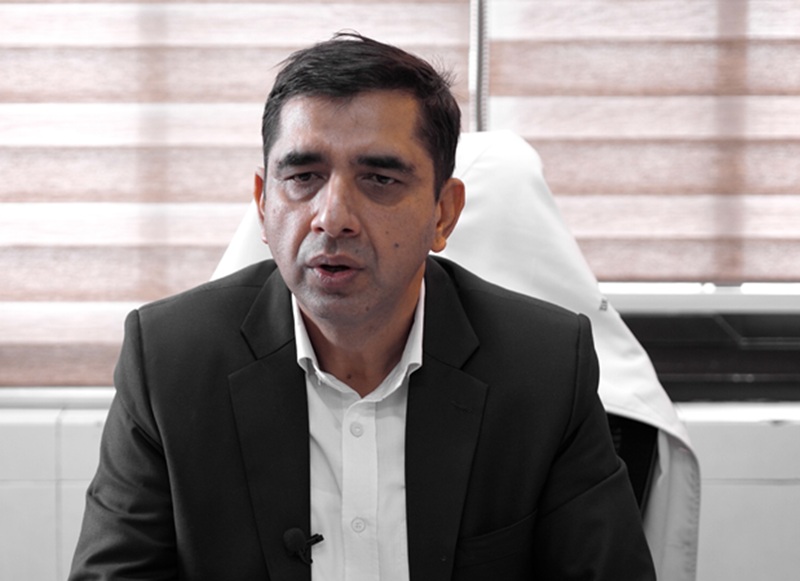
Speaking with ICT Frame Magazine, Hospital Director and Senior Obstetrician-Gynecologist Dr. Shree Prasad Adhikari outlined strategic updates spanning digital queue management, AI-driven patient assistance, and lowered In Vitro Fertilization (IVF) service costs, alongside critical policy and infrastructure hurdles facing the hospital.

Modernizing Patient Care: AI Systems, SMS Reports, and Digital Queuing
To minimize overcrowding and streamline clinical workflows, the hospital management has instituted several technology-first solutions designed to improve service accessibility.
1. Digital Token Queues and Additional Ticketing
The transition from manual queuing to a digital token system allows patients to monitor their place in line directly via mobile devices. Coupled with an additional ticket counter added in the current fiscal year, patient wait times inside the facility have dropped significantly.
2. Direct Mobile SMS Lab Reports
While diagnostic lab results are currently accessible via QR codes, the hospital is finalizing a system to deliver diagnostic reports directly to patients via SMS. This integration eliminates unnecessary follow-up commutes solely for physical paper retrieval.
3. AI-Powered Patient Assistance and Bed Allocation
To solve persistent phone line congestion, the hospital is constructing an AI-based virtual information assistant. The system will automate real-time inquiries regarding:
-
Outpatient Department (OPD) schedules and attending physicians
-
Paying services, ward blocks, and available bed numbers
-
General hospital orientation and administrative guidance
Work is also underway to shift full bed allocation management to a centralized digital framework.
Reforming IVF Services: Policy Frameworks, Insurance, and Human Capital
While fertility services continue to expand, operating advanced reproductive technology within a public hospital framework requires significant policy updates and workforce development.
Urgent Need for Centralized Registry Legislation
Dr. Shree Prasad Adhikari emphasized that clear legislation and centralized record-keeping are required for IVF and embryo handling in Nepal. He advocated for statutory provisions within the Health Act to establish a Ministry of Health central database tracking:
-
Qualified donor criteria (age limits, legal definitions, and financial bounds)
Advertisement

-
Embryo usage logs, storage tracking, and destruction records
-
Transparent marital status regulations for prospective donors and recipients
Lowering Costs and Health Insurance Integration
The average cost for IVF treatment at Prasuti Griha currently stands at approximately NRs 200,000. Dr. Shree Prasad Adhikari urged the Government of Nepal to bring IVF services under the national health insurance coverage framework, making fertility care financially accessible to broader socio-economic demographics.
Addressing the National Embryology Skills Deficit
A major bottleneck in scaling IVF services nationwide is the complete absence of formal embryology courses within Nepal’s university system. Lab embryologists must currently obtain specialized degrees in India or other destinations abroad. Establishing accredited local training programs remains essential to build a stable pipeline of specialized laboratory personnel.
Overcoming Infrastructure Hurdles and Administrative Constraints
Despite technological modernization, physical space limitations and administrative delays impede long-term growth.
Infrastructure Expansion and Parking Solutions
Aging facility structures and cramped OPD waiting halls remain daily challenges for visitors. Discussions are underway with the Ministry of Health and physical infrastructure ministries to manage acute parking shortages. Additionally, plans have been initiated for the construction of a dedicated new maternity building in the coming year.
The O&M Survey Delay and Staff Retention
A fundamental operational challenge facing Prasuti Griha is the delay in conducting a comprehensive Organization and Management (O&M) survey.
Sanctioned Permanent Posts: 68 (Government of Nepal)
Contract/Committee Posts: 560 (Hospital Development Committee)
Without an updated government O&M survey, permanent positions cannot be sanctioned. Over-reliance on contract personnel creates continuous staff turnover, as experienced healthcare workers transition out while new candidates require constant retraining.
Strategic Growth: Expanding the Kupandol Satellite Facility
To decentralize patient volume from the primary Kathmandu site, Paropakar Maternity Hospital is expanding operations at its Kupandol satellite clinic.
Current offerings at Kupandol include IVF, safe abortion care, family planning, and gynecology OPD services. In the upcoming year, the hospital will add a dedicated pregnancy OPD and an on-site diagnostic laboratory, offering complete maternal healthcare at the satellite location.
Balancing Innovation with Systemic Support
The strides made by Paropakar Maternity and Women’s Hospital demonstrate how public healthcare institutions in Nepal can successfully embrace digital transformation to elevate patient care.
From AI-driven communication and SMS-based reporting to significantly more accessible IVF treatment options, Prasuti Griha is actively redefining maternal healthcare standards.
However, technological modernization alone cannot solve every systemic bottleneck. For long-term sustainability and true universal access, particularly in advanced reproductive services, the hospital requires critical government backing.
Expediting the O&M survey to secure permanent staffing, resolving physical infrastructure limitations, and integrating fertility treatments into national health insurance policies will be vital next steps. By pairing digital innovation with strong legislative and structural support, Prasuti Griha can cement its role as a pioneering model for public health delivery across the country.