
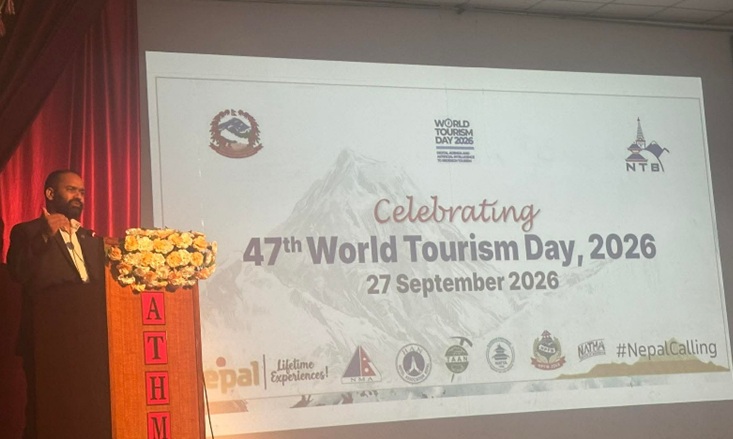
Redesigning Tourism: How Nepal is Leveraging AI and Digital Technology for the Future

29th September 2026, Kathmandu
As the global tourism industry rapidly evolves, Nepal is setting its sights on a tech-driven transformation. Marking the 47th World Tourism Day, key government officials, international travel experts, and industry leaders gathered to deliberate on this year’s international theme: “Digital Agenda and AI to Redesign Tourism.”
With a strong emphasis on smart infrastructure, crisis management, and sustainable growth, the dialogue signals a major shift in how Nepal plans to market its rich cultural and natural heritage to the world.
Bridging Gaps Through Inter-Ministerial Collaboration
Speaking at the landmark event, Minister for Culture, Tourism, and Civil Aviation, Khadak Raj Paudel ‘Ganesh’, underscored that modern tourism development cannot rely on a single ministry alone.
-
Institutional capacity building across all tourism-related government bodies to upgrade service delivery.
-
Private-sector partnerships to address existing gaps and bottlenecks in tourism laws and regulations.
Minister Paudel also emphasized blending Nepal’s indigenous traditions, festivals, and Himalayan heritage into sustainable tourism frameworks.

Scaling Up Digital Tech for Disaster Management and Tourism Safety
Drawing vital lessons from recent environmental disruptions such as the infrastructure damage along the Langtang trail and the Bhotekoshi flood, the Nepal Tourism Board (NTB) highlighted technology’s role in crisis readiness.
Santosh Pant, Acting CEO of the NTB, outlined how digital systems are transforming travel safety:
Real-time Travel Updates: Maintaining dynamic databases to keep tourists informed of trail conditions and active routes.
Advertisement

Early Warning Systems: Deploying advanced risk-alert networks to protect travelers and manage emergencies effectively.
Targeted Destination Promotion: Utilizing digital marketing platforms to deliver verified, accurate, and need-based information to international and domestic travelers.
Global Insights: The Growing Role of AI in Nature-Based Tourism
Keynote speaker Andrew Jones, Chairman of the PATA Foundation, reaffirmed the organization’s commitment to supporting Nepal’s tourism revival. He noted that artificial intelligence and digital media are becoming indispensable tools for promoting nature-based tourism sustainably.
To aid recovery, the Nepal Tourism Recovery Fund remains actively operational, providing vital relief and support to local operators, guides, porters, drivers, and frontline tourism workers affected by natural calamities.
Key Highlights from the National Tourism Special Event
The event served as a launchpad for several major tourism initiatives:
New Promotional Audiovisual: The Nepal Tourism Board launched a fresh promotional video designed to showcase hidden and emerging Nepalese destinations to global markets.
Destination Villages of the Year: VITOF-Nepal officially declared three rural communities as “Destination Villages of the Year,” handing out certificates to community representatives to promote decentralized rural tourism.
Tech & Employment Integration: Experts from the National Planning Commission and the House of Representatives’ International Relations and Tourism Committee discussed strengthening national flag carriers like Nepal Airlines, protecting local jobs, and utilizing AI to curb misinformation.
As World Tourism Day celebrations conclude, Nepal’s strategic pivot toward AI-driven management and digital infrastructure highlights a clear vision: a safer, smarter, and more resilient future for travelers and local communities alike.
For more: Redesigning Tourism Nepal Leveraging AI


