
Standard Chartered Bank Nepal Partners With FIU Nepal For AML Compliance Capacity Building

22nd July 2026, Kathmandu
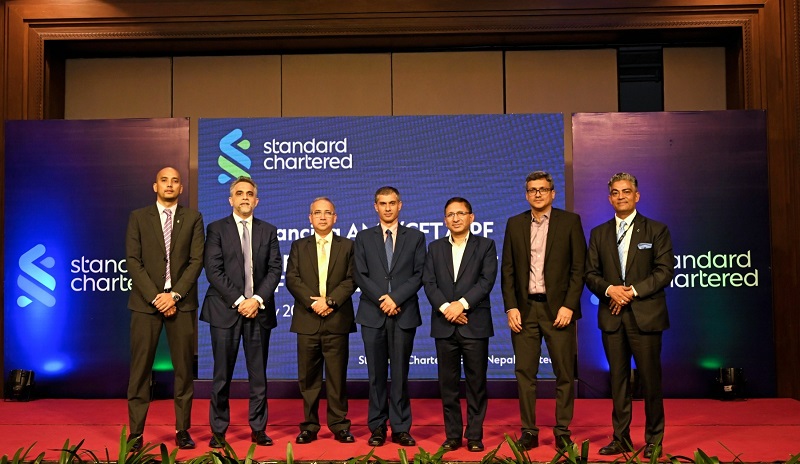
Standard Chartered Bank Nepal Limited, operating in direct collaboration with the Financial Intelligence Unit Nepal of Nepal Rastra Bank, successfully hosted a comprehensive full day workshop titled Enhancing AML CFT CPF Compliance Effectiveness Aligning with FATF Standards in Kathmandu on July 22, 2026.
Standard Chartered Partners FIU Nepal
The high level educational event brought together more than 140 high ranking professionals and operational experts from across the financial ecosystem of Nepal to deliberate on strategies for combatting financial crime, improving regulatory oversight, and facilitating the exit of the nation from the Financial Action Task Force grey list.

Overview Of The Capacity Building Session In Kathmandu
The capacity building initiative served as a crucial platform for knowledge exchange, inter agency coordination, and institutional policy alignment. The event saw active participation from key stakeholders across multiple sectors of the national economy:
- Representatives from central banking and financial regulatory authorities
- Senior executives from commercial banks, development banks, and finance companies
- Securities market intermediaries and investment management entities
- Key representatives from private and public insurance enterprises
- Administrative leaders from saving and credit cooperatives
- Officials from designated non financial businesses and professions along with other reporting entities
The primary aim of the gathering was to establish a unified framework for identifying financial risks, strengthening risk based supervision, and enhancing operational compliance mechanisms across all reporting institutions.
Key Focus Areas And Financial Action Task Force Standards
The workshop featured an intensive curriculum centered around the strategic goals of the Financial Action Task Force, the global watchdog overseeing anti money laundering, countering the financing of terrorism, and countering proliferation financing.
The core themes addressed during the technical modules included:
Understanding Nepal Journey With Global Compliance Bodies
Participants reviewed the historical timeline of engagement with international regulators, assessing past mutual evaluation reports and the specific action plan points assigned to the country.
Analyzing The Macroeconomic Implications Of Grey Listing
Speakers provided an in depth analysis of how remaining on the grey list affects national correspondent banking relationships, cross border trade settlement costs, foreign direct investment inflows, and the overall international standing of the domestic financial system.
Adapting Regional And Global Lessons
Advertisement

The sessions explored successful case studies from other jurisdictions across Asia and beyond, illustrating how structural legal reforms, institutional capacity enhancements, and aggressive asset recovery frameworks enabled other nations to successfully exit increased monitoring status.
Actionable Measures For Achieving A Grey List Exit
The workshop outlined practical operational measures necessary to fulfill national commitments, emphasizing the need for higher quality financial intelligence reports, enhanced beneficial ownership transparency, and more robust investigative outcomes.
Expert Presentations On Managing Financial Crime Risks
The technical delivery of the workshop was spearheaded by senior global experts from Standard Chartered Bank, who brought extensive regional and international expertise to the discussion:
- Jairam Manglani, Head of Financial Crime Compliance for India and South Asia at Standard Chartered Bank
- Jayesh Kadam, Director of Financial Crime Compliance Investigations and Risk Specialist for India at Standard Chartered Bank
The presenters highlighted the growing complexity of cross border financial crime schemes and provided practical tools for institutional risk management. They stressed that reporting entities must move beyond basic check the box compliance toward dynamic, risk based frameworks capable of identifying complex money laundering networks, trade based financial crime, and illegal money transfer channels.
Statements From Senior Regulatory And Banking Leaders
The workshop featured keynote addresses from senior central bank officials, regulatory directors, and executive leadership from Standard Chartered Bank, all underscoring the vital importance of collective action:
- Bashu Dev Bhattarai, Director of FIU Nepal
- Dr Hari Kumar Nepal, Director of Nepal Rastra Bank
- Himanshu Dhyani, Head of Financial Institutions for GCNA at Standard Chartered Bank
- Rajkamal Basnet, Head of Financial Institutions Nepal at Standard Chartered Bank
Speakers emphasized that achieving long term financial integrity requires continuous public private partnership, transparent data sharing, risk based supervisory approaches, and measurable accountability across all reporting sectors.
Highlighting the overarching purpose of the workshop, Rajkamal Basnet noted that combating financial crime demands strong institutional partnerships, ongoing professional learning, and a unified dedication across the whole financial sector. He added that through such capacity building efforts, Standard Chartered aims to support industry wide skill development and contribute directly to bolstering the financial compliance structure of Nepal.
Institutional Background And Credit Rating Standing Of Standard Chartered Bank Nepal
Standard Chartered Bank Nepal Limited continues to play a prominent role in the growth and development of the national financial architecture:
- Operating continuously in Nepal since 1987 as a premier joint venture banking institution
- Ownership structure featuring 70.21 percent holding by Standard Chartered Group and 29.79 percent public equity held by Nepalese investors
- Stock listing on the Nepal Stock Exchange as a major commercial banking asset
- Unique status as the sole international bank currently operating within Nepal
- Distinction of receiving the ICRANP IR AAA rating from ICRA Nepal as the safest financial institution regarding timely debt servicing for six consecutive years
The successful completion of the AML CFT CPF workshop demonstrates the ongoing dedication of Standard Chartered Bank Nepal Limited to advancing transparency, governance, and institutional resilience throughout the financial ecosystem of Nepal.
For More: Standard Chartered Partners FIU Nepal