
Evaluating the Telecommunications Situation in Nepal: 5G Ready or Systemic Crisis?

19th June 2026, Kathmandu
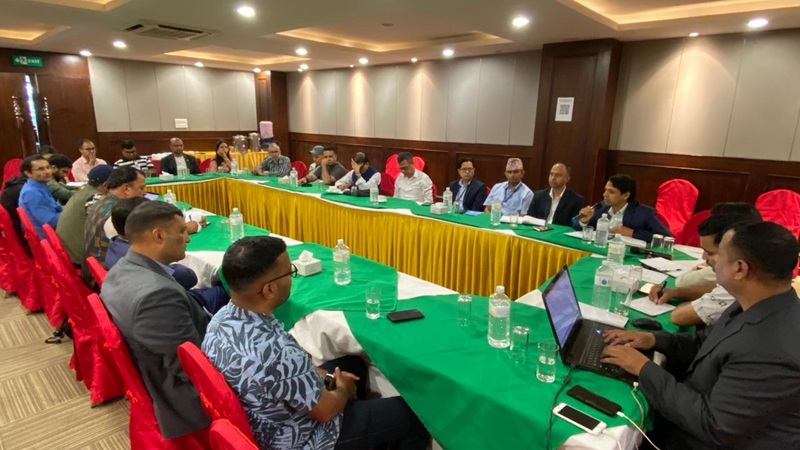
Nepal is taking definitive steps toward the commercial rollout of fifth-generation (5G) mobile technology. At a recent roundtable discussion titled “Present Telecommunication Situation of Nepal,” organized by the Technology Journalists Forum (TJF), key government officials, regulatory bodies, and leading telecom operators expressed mutual readiness to fast-track the 5G ecosystem in the country.
Telecommunications Situation in Nepal

Nepal Telecom Authority (NTA) Prepares for 5G Spectrum Auction
The telecom regulator is geared up to distribute the necessary airwaves to operators. Min Prasad Aryal, spokesperson for the Nepal Telecommunication Authority (NTA), confirmed that the required frequencies for 5G have already been determined.
“We are fully prepared to proceed with the spectrum auction process,” Aryal stated. “As long as the service providers are ready to step up, the NTA faces no obstacles in distributing the spectrum.”
Telecom Giants Spark 5G Ecosystem Readiness
Nepal’s leading telecommunication companies are waiting for the green light from the regulator to begin operations.
Nepal Telecom (NT) Focuses on Urban Centers
Nepal Telecom’s Deputy Manager, Rajendra Dulal, and Senior Business Officer, Prakash Chandra Sigdel, announced that internal decisions have already been finalized to launch 5G services across major cities and metropolitan areas.
NT conducted 5G trials three years ago but faced a market limitation where only about 5% of Nepalese mobile handsets were 5G-compatible. Today, that market share has surpassed 20%, indicating that Nepalese consumers are ready for high-speed connectivity.
Ncell Pushes for 5G Trials
Private telecom giant Ncell has formally requested government permission for the third time to initiate its 5G trials. Ncell has submitted an application to the NTA seeking 15 MHz of frequency in the 700 MHz band and 10 MHz in the 2600 MHz band.
Why Nepal Needs 5G: Beyond Standard Data Usage
While 4G remains sufficient for daily smartphone browsing, government experts emphasize that 5G is crucial for macro-level digital infrastructure.
Krishna Kumar Jha, an engineer at the Ministry of Information and Communications, highlighted that 5G is essential for:
Smart City Initiatives: Building interconnected urban infrastructure.
Machine-to-Machine (M2M) Communication: Streamlining automated systems.
Digital Governance: Powering NTA’s smart meters and public bus GPS tracking.
High-Quality Live Streaming: Delivering seamless broadcasts for events like the Nepal Premier League (NPL).
Advertisement

Key Challenges Facing Nepal’s Telecom Sector
Despite the enthusiasm, industry experts and consumer rights activists raised critical concerns regarding infrastructure, policy, and service quality.
1. Quality and Governance Concerns
Telecommunication expert Anand Raj Khanal warned that launching 5G while existing 4G services remain sub-optimal could lead to widespread consumer dissatisfaction. Khanal pointed out that bureaucratic hurdles hinder progress, noting that the NTA lacks the autonomy it needs because its leadership is deeply tied to ministries and top political offices.
2. High Taxation and Ease of Doing Business
Chiranjibi Adhikari, Executive President of CAN Federation, blamed weak implementation of government incentives for IT service exports and urged separate guidelines for IT procurement. He pointed out that telecom and internet service providers (ISPs) in Nepal are heavily taxed, paying 30% to 40% of their revenue in taxes. He criticized this as an unfriendly industry policy that stifles innovation.
Shifting from a labor pool to a global tech hub: NAS-IT’s Gaurav Pandey calls for progressive IT export policies that unleash Nepalese tech entrepreneurship.
3. ISP Competition and Domestic Wi-Fi Issues
Binay Bohra, Managing Director of Vianet Communications and former president of ISPAN, noted that Nepal’s internet market is highly competitive, with a 15% to 20% annual customer churn rate as users switch providers looking for better quality. He clarified that current internet speed issues are rarely due to the core network but are often caused by poor internal home wiring or outdated Wi-Fi routers.
Bohra also welcomed the potential entry of satellite internet providers like Starlink for remote areas, provided all companies face equal tax and regulatory frameworks.
The Path Forward: Procurement and Policy Reform
Consumer rights advocates, including Jay Prasad Poudel (Secretary of the Consumer Freedom Protection Forum), highlighted a massive gap between the high prices consumers pay and the actual service quality they receive.
To bridge this gap and successfully launch 5G, the forum concluded that Nepal must:
-
Fast-track the construction of 1,600 proposed telecom towers within a year via expedited procurement.
-
Upgrade existing towers directly into a 5G ecosystem to avoid the systemic delays previously seen with billing system upgrades.
-
Amend outdated telecommunication acts and regulations to create an agile, tech-friendly, and united IT sector.
Purna Bhakta Duwal, President of the Technology Journalists Forum (TJF), concluded the session by urging all IT and telecom associations to stand united in lobbying for policy reforms to accelerate Nepal’s digital transformation.
For more: Telecommunications Situation in Nepal


