Trauma Society of Nepal Established to Strengthen Orthopedic and Emergency Medical Care

12th June 2026, Kathmandu
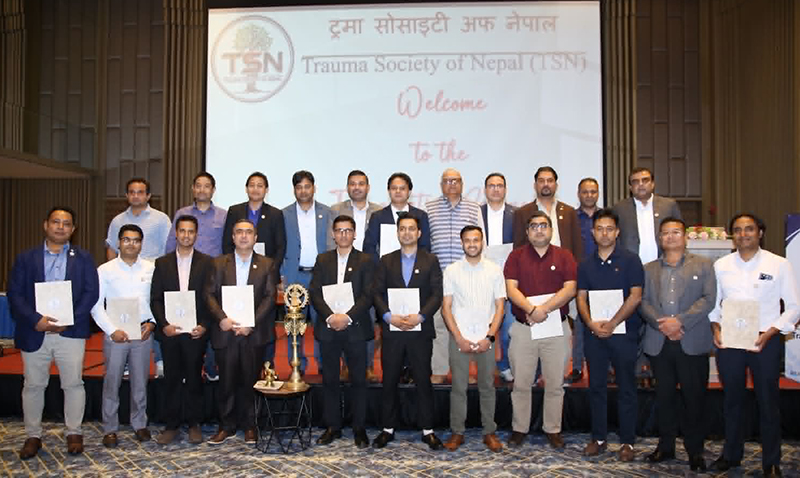
The Trauma Society of Nepal has been officially established during a formal assembly held in Kathmandu, appointing senior orthopedic surgeon Dr Pramod Lamichhane as the inaugural chairperson.
Trauma Society Nepal Formed
The creation of this medical society marks a critical turning point for the nation health management networks, which regularly handle high volumes of bone fractures and emergency injuries. By organizing the scattered network of bone specialists, trauma surgeons, and emergency responders under one regulatory banner, the association intends to transform how clinical emergencies are handled from the initial accident scene directly to the operating theater.

Strategic Objectives: Redefining National Trauma Care Systems and Specialist Access
The newly organized medical group has established a clear roadmap to counter the growing volume of severe trauma cases stemming from transportation accidents, construction incidents, and natural disasters.
The clinical founders noted that traditional isolated hospital networks often struggle with resource limits, making a centralized knowledge hub necessary for local doctors.
The core operational goals driving the initial phases of the society include:
- Expanding Specialized Orthopedic Access: Working to bring advanced bone setting and fracture stabilization systems outside the capital city into rural district hospitals.
- Upgrading Professional Skills: Organizing regular continuous medical education courses to teach regional clinicians the latest global practices in complex bone reconstructions.
- Standardizing Emergency Treatment Protocols: Establishing uniform clinical guidelines so that trauma victims receive identical high quality stabilizing care regardless of the local clinic they reach.
- Facilitating Peer Knowledge Exchange: Providing an open academic arena where surgeons can review complex bone cases, structural failures, and modern surgical fixations together.
The board highlights that minimizing the time between an initial impact injury and a definitive orthopedic surgery remains the most vital factor in reducing permanent physical disability across the population.
Mapping the Leadership Grid: Executive Committee and Medical Advisory Structure
The foundation meeting in Kathmandu brought together prominent orthopedic figures to form the inaugural executive committee responsible for guiding the organization early policies.
Advertisement

The chosen leadership panel consists of recognized medical practitioners who lead major surgical divisions and academic medicine departments across various provinces.
The formal leadership structure of the Trauma Society of Nepal includes:
- Chairperson: Dr Pramod Lamichhane, a prominent orthopedic surgeon chosen to lead the society structural development.
- Official Patron: Prof Dr Ramesh Prasad Singh, a veteran orthopedic specialist providing senior medical oversight and institutional guidance.
- Senior Vice Chairperson: Dr Shailendra Kumar Duwal Shrestha, assisting in coordinating national health board strategies.
- Vice Chairperson: Dr Hemanta Kumar Gupta, focusing on managing external relationships and inter hospital clinical networks.
- General Secretary: Dr Bijayendra Adhikari, overseeing daily administrative operations, membership records, and official board communications.
This central management team is supported by a dedicated scientific committee led by Dr Rohit Shrestha, alongside provincial representatives tasked with setting up active training sub units across all seven provinces.
Future Academic Initiatives, Rural Care Programs, and Clinical Interventions
To move from structural planning into practical public health execution, the society has designed an active schedule of community interventions and professional training workshops.
These upcoming programs aim to solve immediate field challenges while collecting localized data to influence future national healthcare policies.
The planned activities set to roll out across the coming months include:
- Advanced Trauma Fellowships: Creating specialized training paths to give young medical graduates hands on experience in high volume trauma centers.
- Rural Health and Surgical Camps: Sending mobile teams of orthopedic surgeons into remote mountainous corridors to treat long standing bone issues and neglected fractures.
- National Awareness Campaigns: Launching public safety drives focused on proper initial handling of accident victims to prevent spinal injuries before ambulances arrive.
- Multilateral Policy Collaboration: Partnering with government ministries to design better emergency medical transit systems and upgrade public hospital trauma wards.
By merging continuous academic research with direct community outreach, the Trauma Society of Nepal seeks to build a resilient healthcare safety net capable of defending human life during critical emergency scenarios.
For More: Trauma Society Nepal Formed