Upper Trishuli-1 Skill Training Program for Local Employment

21st January 2026, Kathmandu
The Upper Trishuli-1 skill training initiative has been officially launched in the Rasuwa district with the objective of creating sustainable employment and self-employment opportunities for communities affected by the Upper Trishuli-1 Hydropower Project. The 216 megawatt project, which is currently under construction, has taken a significant step toward strengthening local livelihoods through structured, demand-based vocational training programs.
Upper Trishuli-1 Skill Training
This initiative represents a shift in the hydropower sector of Nepal, moving beyond traditional land compensation toward long-term human capital investment. By equipping local residents with marketable skills, the project promoter is ensuring that the economic benefits of energy production remain within the impact area.
Skill Development for Project-Affected Communities
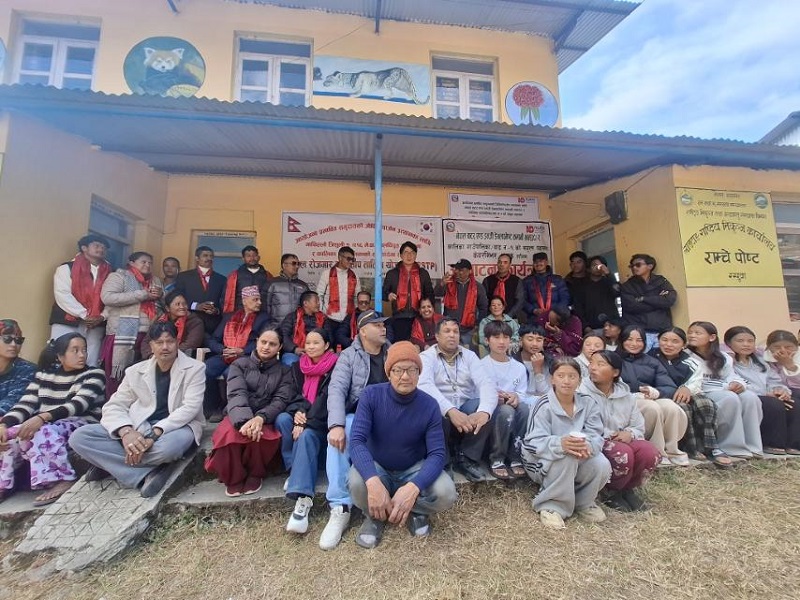
In the first phase of the program, 40 local residents from project-affected areas such as Ramche and Kalikasthan in Rasuwa have begun receiving intensive skill-based training. The program is being implemented by Nepal Water and Energy Development Company Private Limited, the project promoter, in close collaboration with the Kalika Rural Municipality.
The training program was formally inaugurated at the Ward No. 1 office of the Kalika Rural Municipality. Based on detailed household needs and local labor market potential, the participants have been divided into two primary groups:
20 participants are receiving specialized caregiver training.
20 participants are being trained in professional hotel operations.
These specific areas were chosen because they align with the current demands of the service sector in Nepal and abroad, significantly increasing the likelihood of immediate employment and income generation for the trainees.
Expansion Plan and Long-Term Targets
Project authorities have confirmed that this training initiative is not a one-time event but a phased program that will gradually expand to other wards of the affected municipalities. Overall, the program aims to provide skill-based training to approximately 370 individuals from the communities directly impacted by the dam and powerhouse construction.
This phased approach allows the company to monitor the success of the first batch and adapt the curriculum based on community feedback and evolving market needs. It reflects a sustainable commitment to community development that parallels the physical construction timeline of the hydropower plant.
Advertisement


Local Leadership and Community Participation
Speaking at the inauguration ceremony, Dawa Tamang, the Chairperson of Kalika Rural Municipality Ward No. 1, highlighted that conducting demand-based training at the local ward level has made participation more accessible for residents who might otherwise struggle to travel to urban centers. He emphasized that such programs are crucial for developing a skilled local workforce that can contribute to the regional economy.
Tamang urged the participants to remain actively engaged throughout the training period and to apply their acquired skills in practical settings. The goal is to ensure that the 216 megawatt project leaves a legacy of empowered individuals who can sustain their families long after the construction phase is completed.
Commitment to Social and Economic Strengthening
The Chief Operating Officer of Nepal Water and Energy Development Company, Sanghee Male, has reaffirmed the commitment of the company to strengthening the social conditions of project-affected households. Under the Community Support Program, the company has already provided various forms of assistance, including:
- Distribution of ambulances to local municipalities.
- Support for educational and health facilities.
- Improvements in drinking water and road infrastructure.
- Cultural preservation initiatives and disaster relief.
These efforts are integrated into the Corporate Social Responsibility framework and the Indigenous Peoples Development Plan of the project. This ensures that the Korean led foreign direct investment project follows international standards for social safeguards.
Data-Driven and Market-Oriented Training Design
The training modules were not selected at random; they were originally identified through a demand-based assessment conducted in 2018 and recently updated through rapid market surveys. By analyzing current trends, the project has identified several other key areas for future training:
- Early childhood development and facilitation.
- Masonry and construction-related skills.
- Bakery, cooking, and waiter services.
- Tailoring and beauty parlour services.
These programs are specifically designed to support the self-employment of youth and women, providing them with the tools to start small businesses within their own communities.
Project Progress and National Significance
The Upper Trishuli-1 Hydropower Project is a landmark in the energy sector of Nepal as it is the largest project developed through direct foreign investment led by South Korean companies. Major structures, including the dam, are currently under construction in Amachhodingmo Rural Municipality–1 (Haku), while the underground powerhouse is being built in Uttargaya Rural Municipality–1.
Construction work began in Poush 2078 (December 2021), and the project has currently achieved 74 percent physical progress. The authorities are targeting a completion date of Mangsir 2083 (late 2026). Once operational, the project will supply a significant amount of electricity for domestic consumption, contributing to the energy security and economic growth of the nation.
A Model for Inclusive Development
The Upper Trishuli-1 skill training program stands as a strong example of inclusive infrastructure development. By investing in human capital alongside physical construction, the project ensures that local communities are not just spectators but active participants in national development. As the 216 megawatt project nears completion, the skills gained by the residents of Rasuwa will serve as a permanent asset for the district.
For More: Upper Trishuli-1 Skill Training