18th BRICS Summit in New Delhi: Key Highlights and Unanimous Declaration

13th September 2026, Kathmandu
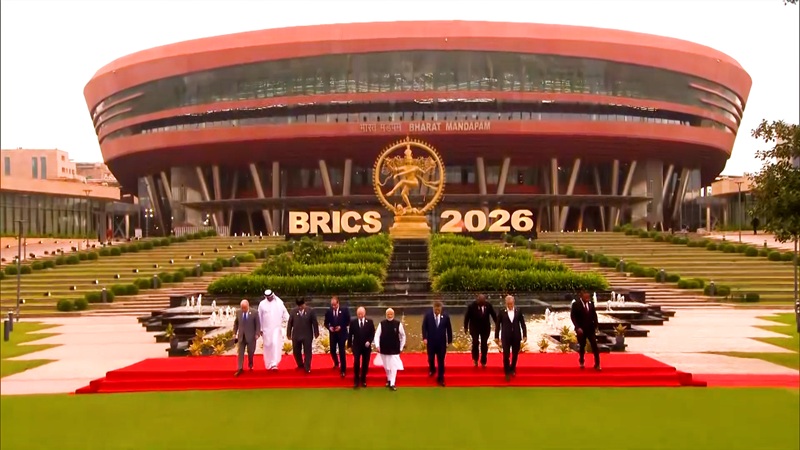
The 18th BRICS Summit officially kicked off at Bharat Mandapam in New Delhi, India, drawing global attention as leaders from major emerging economies gathered to shape the future of international cooperation.
Under India’s robust presidency theme, “Building for Resilience, Innovation, Cooperation, and Sustainability,” the two-day summit reached a major diplomatic milestone with the unanimous adoption of the New Delhi Declaration 2026.
Indian Prime Minister Narendra Modi announced the breakthrough to the floor, stating, “No member has raised any objections. The New Delhi Declaration 2026 has been adopted unanimously.”
High-Level Attendance and Strategic Diplomacy
India is hosting the prestigious BRICS summit for the fourth time, reinforcing its stature as a bridge-builder for the Global South. Prime Minister Modi personally welcomed key world leaders, including:
-
Chinese President Xi Jinping
-
Russian President Vladimir Putin
-
Iranian President Masoud Pezeshkian
-
South African President Cyril Ramaphosa
-
Egyptian President Abdel Fattah el-Sisi
-
Ethiopian Prime Minister Abiy Ahmed
Advertisement

-
Indonesian President Prabowo Subianto
On the sidelines of the core meetings, leaders toured the “India Innovates” exhibition at Bharat Mandapam. High-profile visuals of PM Modi standing alongside President Xi, President Putin, and President Pezeshkian drew intense global media focus, highlighting diplomatic engagement amidst an evolving geopolitical landscape.

Key Highlights of the New Delhi Declaration 2026
Following intensive, marathon negotiations—which stretched into the early hours of Saturday morning under India’s mediation—the comprehensive 140-point joint statement successfully addressed several complex global friction points:
1. Reforming Global Governance & The UN
The declaration stresses an urgent need to overhaul international financial institutions like the IMF and World Bank, alongside a push for a more representative, multipolar United Nations Security Council. Both Russia and China reaffirmed their support for India and Brazil to secure expanded roles within a reformed UN structure.
2. Trade Pressures and Unilateral Tariffs
Amid mounting global economic anxieties and rising unilateral trade and tariff measures, BRICS members underscored their commitment to a rules-based, transparent, and fair multilateral trading system centered on the World Trade Organization (WTO). Discussions also advanced local currency settlements and financial messaging interoperability to build financial resilience.
3. A Firm Stance on Counter-Terrorism
The declaration maintains zero tolerance for terrorism, explicitly condemning cross-border terrorism, terror financing, and safe havens. Citing past regional security incidents, the bloc called for international accountability and the expedited adoption of the UN Comprehensive Convention on International Terrorism.
4. Energy Security and Sustainable Transitions
Balancing climate commitments with economic reality, the declaration acknowledges that fossil fuels will continue to play a vital transitional role for emerging markets and developing economies (EMDEs), even as members scale up renewable energy integration, green tech collaboration, and smart infrastructure.
5. Conflict Resolution and Diplomacy
Addressing ongoing geopolitical volatility—including conflicts in West Asia and Ukraine—the declaration champions multilateral dialogue, peaceful diplomacy, humanitarian aid access (such as in Gaza), and strict adherence to international law.
Conclusion: Shaping the Next Decade
The successful consensus on the New Delhi Declaration 2026 solidifies BRICS’ evolution into an influential anchor for the Global South. By navigating sharp geopolitical divisions and securing a unified framework, India’s presidency has charted a pragmatic roadmap focused on technological innovation, financial stability, and sustainable multilateral growth for the next decade.
For more: 18th BRICS Summit in New Delhi