Why Did the Nepali Congress Lose? 27 Critical Reasons Behind the 2082 Election Defeat

20th March 2026, Kathmandu
The Nepali Congress (NC), Nepal’s oldest democratic powerhouse, recently went public with its preliminary review of the House of Representatives (HoR) Election held on February 21, 2082.
Why Did Nepali Congress Lose
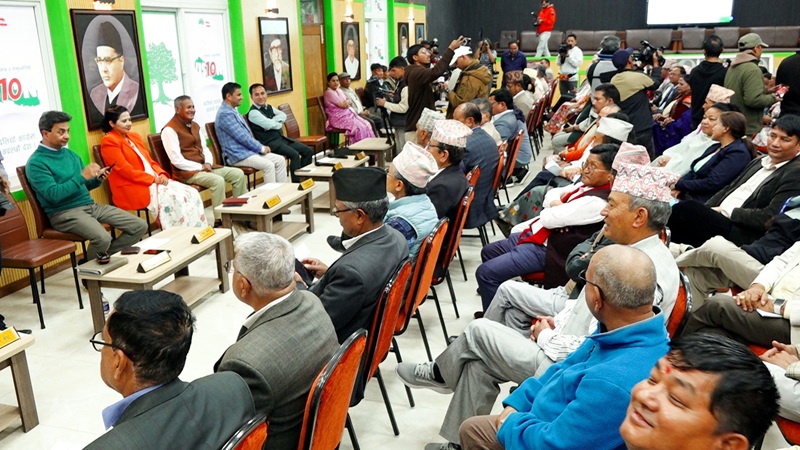
Presented by Vice President Bishwa Prakash Sharma during the Central Committee meeting, the report offers a candid look at why the party slipped to the second position and why it ultimately rejected the resignation of President Gagan Thapa.

The “2082 Mandate”: From First to Second
Historically, the Nepali Congress has seen a rhythmic “win-loss” cycle since 1990. After emerging as the largest party in 2079, the 2082 results saw the NC relegated to the opposition benches.
While the Rastriya Swatantra Party (RSP) saw significant gains, the NC report suggests their defeat was less about the opponent’s strength and more about the party’s failure to adapt.
1. The Leadership Crisis: “Repeated Faces” and the Exit Policy
One of the most stinging criticisms in the report is the public’s irritation with seeing the same leaders in power for decades.
The Irritation Factor: Voters were “irritated” by the lack of new faces in the Prime Ministerial seat.
The Exit Policy: The report admits that the party failed to implement a “Graceful Exit” policy for senior leaders, which prevented the rise of a “statesman” figure that the Gen Z population could trust.
2. The Colonization of Algorithms and Populism
In a digital-first era, the NC admits it was outmaneuvered on social media.
Algorithm Captivity: The report highlights that “Algorithms” now capture minds and decisions more effectively than traditional door-to-door campaigns.
Advertisement

The Populist Narrative: New parties successfully sold a two-part story: “The old are all corrupt” and “We are the miracle cure.” The NC struggled to break this digital “colonization.”
3. Policy Failures and “Dhilasusti” (Delays)
From the shortage of chemical fertilizers for farmers to the delay in the Federal Civil Service Act, administrative sluggishness cost the party dearly. The report identifies that the “average” performance of the NC-UML coalition government failed to ignite hope among the Nepalese electorate.
27 Reasons for the Defeat: At a Glance
| Category | Key Factors Identified |
| Political | Weak opposition voice, contradictory alliances (UML/Maoist), and lack of constitutional amendments. |
| Social | The “Gen Z” rebellion, dissatisfaction among Diaspora (NRNs), and the “Sri Lanka” economic fear. |
| Organizational | Internal “Silence Killing” (sabotage), traditional structures failing modern challenges, and lack of “Special Convention” impact. |
| Communication | Failure to market 35 years of democratic achievements and inability to counter “nothing has happened” rhetoric. |
The Gagan Thapa Resignation: Why It Was Rejected
Despite President Gagan Thapa taking moral responsibility for the defeat, the Central Committee unanimously rejected his resignation. The logic was clear:
“Assigning the blame for a forest fire to the person who arrived last to extinguish it is not justice.”
With only 50 days between the Special General Convention and the election, the party concluded that the leadership change was too fresh to be held solely accountable for a decade of accumulated public resentment.
The Path Forward: Constructive Opposition
The Nepali Congress has now committed to a “creative and constructive” role as the main opposition. The party aims to:
Reconstruct Fraternal Organizations: Modernizing wings like the Nepal Student Union and Tarun Dal.
Focus on Meritocracy: Ending the “quota system” in diplomatic and constitutional appointments.
Digital Transformation: Moving beyond traditional campaign styles to reclaim the narrative in the digital space.
For more: Why Did Nepali Congress Lose