Grande Hospital Partners Tokha For Dengue and Malaria Prevention Campaign

30th April 2026, Kathmandu
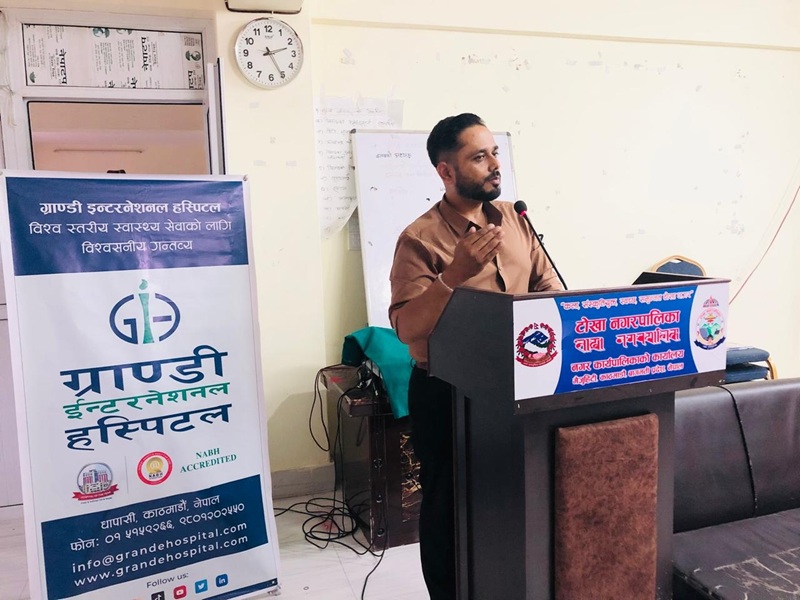
With the onset of the monsoon season, Grande International Hospital recently collaborated with local authorities to organize a comprehensive awareness program on Dengue and Malaria prevention in Tokha.
Grande Hospital Partners Tokha
The initiative aimed to educate residents of Tokha-6 on the rising risks of mosquito-borne diseases and the necessary precautions to stay safe.

Rising Concerns Over Mosquito-Borne Diseases
During the event, Shanta Paudel Khanal, Chairperson of Tokha-6, expressed her concerns regarding the resurgence of these life-threatening diseases. While Malaria was previously considered near-eradicated in many areas, recent outbreaks and the recurring threat of Dengue have put local communities on high alert.
“As the rains begin, the risk of mosquito bites increases significantly. We must remain vigilant about stagnant water in tires, garages, and hotel drums,” Khanal emphasized.
Expert Insights: Understanding Dengue and Malaria
Dr. Prashant Tripathi, an Internal Medicine specialist from Grande International Hospital, provided vital medical insights into how these diseases spread and how to identify them.
Dengue (The ‘Aedes’ Threat)
Transmission: Spread by the Aedes mosquito, which is most active during the day, particularly at sunrise and sunset.
Key Symptoms:
-
-
High-grade fever.
-
Pain behind the eyes.
-
Severe fatigue.
-
Excruciating joint and back pain (often described as “breakbone fever”).
-
Malaria (The ‘Anopheles’ Threat)
Transmission: A parasitic disease spread by the Anopheles mosquito.
Key Symptoms:
-
-
Periodic chills and shivering.
Advertisement

-
Excessive sweating.
-
Headaches and weakness.
-
Prevention and Safety Measures
Dr. Tripathi highlighted that prevention is the most effective tool against these illnesses. To minimize risk, Nepalese citizens and residents are encouraged to follow these preventative steps:
Eliminate Stagnant Water: Regularly empty old tires, pots, and containers where mosquitoes breed.
Protective Clothing: Wear full-sleeved shirts and long trousers to cover the skin.
Use Mosquito Nets: Sleep under a mosquito net (Jhul) regardless of the time of day.
Repellents: Apply mosquito-repellent creams or sprays.
Community Sanitation: Maintain cleanliness in shared public spaces and neighborhoods.
When to Seek Medical Attention
Health experts warn that delays in treatment can be fatal. You should contact a healthcare provider or visit the nearest hospital immediately if you experience:
-
High fever lasting more than two days.
-
Persistent vomiting.
-
Severe abdominal pain.
-
Any signs of unusual bleeding.
About Grande International Hospital: As a leading healthcare provider in Nepal, Grande International Hospital continues to prioritize community health through outreach and education, ensuring that the public is equipped with the knowledge to combat seasonal health crises.
For more: Grande Hospital Partners Tokha