Auditor General Exposes Widespread Loan Irregularities Across Nepal Microfinance Sector

21st May 2026, Kathmandu
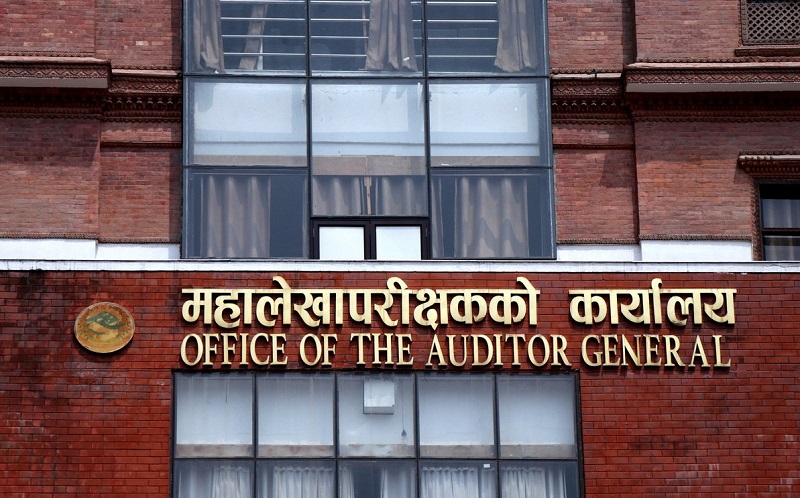
The microfinance sector in Nepal is facing intense administrative scrutiny following critical compliance observations published by the primary state tracking body. In its authoritative 63rd annual report, the Office of the Auditor General has formally highlighted deep discrepancies regarding how non-bank financial companies deploy central bank mandates.
Nepal microfinance regulatory enforcement
The comprehensive review shows clear inconsistencies in how different institutions implement the Unified Directive issued by Nepal Rastra Bank for class D licensed microfinance financial institutions. These ongoing oversight gaps are raising immediate questions regarding credit quality, asset reporting accuracy, and the stability of rural lending networks.

Dual Lending Violations Compromise Prescribed Credit Thresholds
A primary concern detailed by state investigators involves the direct manipulation of credit limits designed to prevent low income borrowers from accumulating unsustainable debt. According to the standing monetary policy guidelines outlined in Directive Number Three, class D institutions are legally permitted to distribute credit up to seven hundred thousand Nepalese Rupees per individual for dedicated agricultural development, cottage micro-enterprise establishment, or general business purposes, provided they secure acceptable physical collateral. The central banking guideline explicitly states that individuals affiliated with local self help borrowing groups can receive either a standard group loan or a separate collateral-based facility, but are strictly barred from holding both loan types simultaneously.
Unbalanced Sanctions Highlight Uneven Institutional Regulatory Enforcement
The field investigations revealed that multiple microfinance networks regularly bypassed these credit boundary protections. In one documented instance, a microfinance institution directly violated the dual lending prohibition by issuing group credit and collateralized credit lines at the same time to six separate borrowers, creating an unauthorized credit exposure totaling three point eight three one million Nepalese Rupees. In response to this elevated financial risk, the Office of the Auditor General ordered the company to instantly set aside eight hundred eight thousand Nepalese Rupees in mandatory loan loss provisioning. However, when another microfinance institution was caught committing comparable violations involving fourteen borrowers, the agency only issued basic corrective instructions, exposing a troubling lack of uniformity in enforcement.
Rampant Restructuring Bypasses Strict Risk Mitigation Guidelines
The official state audit also uncovered extensive systemic non-compliance regarding loan restructuring and debt rescheduling operations. Under the prudential guidelines set forth in Directive Number Two, microfinance organizations are allowed to restructure or reschedule an active credit account exactly once for borrowers who are experiencing documented cash flow disruptions due to extreme adverse circumstances or localized economic downturns. This financial facility can only be extended after proving clear necessity and providing a solid justification. Contrary to these risk management standards, inspectors found that multiple firms were repeatedly altering loan terms to artificially suppress their non-performing loan ratios.
Advertisement

Staggering Millions Trapped in Repeatedly Rescheduled Credit Portfolios
The financial figures compiled by the national audit teams reveal the massive scale of these unauthorized loan extensions. One operating microfinance firm was found to have repeatedly rescheduled active loans for one hundred forty seven borrowers without proper justification, creating an unstable debt portfolio valued at thirteen point three o four million Nepalese Rupees. To address this structural flaw, the Auditor General recommended immediate systemic adjustments to prevent the future recurrence of unauthorized debt extensions. This instance was overshadowed by a far larger violation at a separate microfinance institution, which had repeatedly restructured credit packages for nine hundred forty six borrowers, covering a massive collective sum of one hundred forty one point three six seven million Nepalese Rupees.
Multi Million Provisioning Mandates Burden Vulnerable Balance Sheets
The regulatory penalty applied to the largest violator highlights the hidden risks carried inside rural financial balance sheets. Because the extensive restructuring masking real credit defaults was so widespread, the state authority directed the second microfinance institution to immediately maintain an additional thirty five point nine five million Nepalese Rupees in dedicated loan loss provisioning. This massive diversion of capital into risk reserves directly impacts the net profitability and operational capital of the lender, illustrating how poor internal credit management eventually drains corporate financial strength.
Fragmented Administrative Oversight Undermines Central Bank Mandates
The ultimate conclusion of the Auditor General report paints a highly critical picture of the national financial oversight framework. The state investigators observed that even though identical regulatory violations were uncovered across multiple microfinance operations, the corrective penalties applied by the supervising authorities varied wildly from one entity to the next. The administrative actions ranged from lenient general corrective guidelines to aggressive capital provisioning mandates, showing a distinct lack of uniformity in the enforcement of central bank policies. This fragmented supervisory approach reduces the credibility of national monetary regulations and creates an unequal playing field for operating institutions.
Structural Reforms Imperative to Secure Sustainable Grassroots Credit
Resolving these deep regulatory gaps will require immediate structural changes across the microfinance network of Nepal. As the state audit notes, allowing microfinance companies to loosely interpret risk guidelines and mask bad loans threatens the long term viability of micro-credit delivery systems that millions of rural families depend upon for daily economic survival. Going forward, the central bank must establish standardized automated tracking systems to ensure that penalties are applied equally across all class D networks, ensuring that credit expansion is matched by strict corporate governance and transparent asset classification.