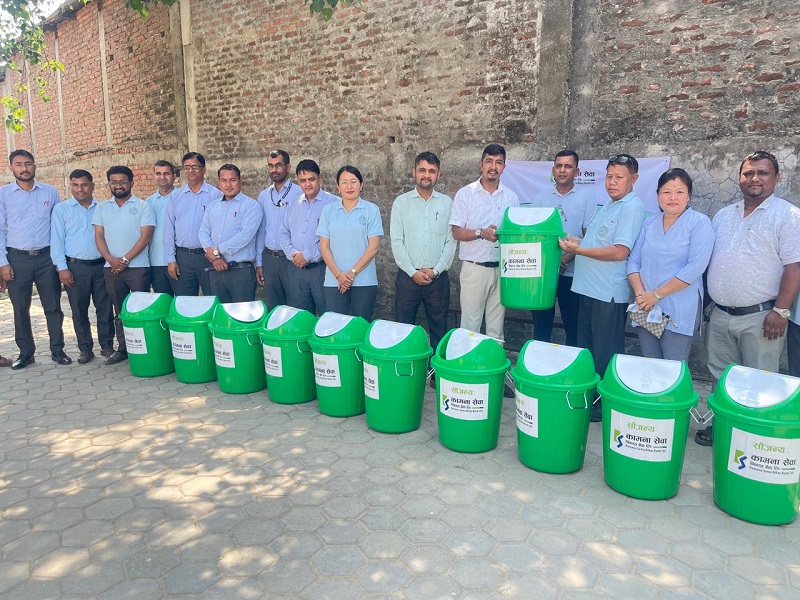
Kamana Sewa Bikas Bank Donates Dustbins to Shree Pashupati School

4th June 2026, Kathmandu
Kamana Sewa Bikas Bank Limited has officially handed over a batch of operational dustbins to Shree Pashupati Secondary School.
KSBBL Donates Dustbins
This specific community health project was organized directly under the corporate social responsibility portfolio of the development banking institution. The strategic donation highlights the bank’s deep commitment to expanding public environmental awareness and rural school infrastructure support.
The sanitation materials were delivered through the active branch office of the bank located in Saljhandi. The localized distribution plan was carried out smoothly to address immediate waste management requirements within the academic campus located in Sainamaina Municipality-10, Rupandehi.
Public health professionals consistently note that maintaining clean school grounds directly enhances student attendance rates. By providing essential sanitation equipment, private sector entities can help local schools establish clean learning environments that shield young children from preventable infections.

High Level Handover of Sanitation Infrastructure on Campus
During a special community ceremony organized inside the school courtyard, Hemanta Babuacharya, the Butwal Area Chief of Kamana Sewa Bikas Bank Limited, formally handed over 12 high capacity dustbins. The sanitation units were received directly by Hari Prasad Thapa, the Principal of Shree Pashupati Secondary School.
The delivery of these commercial grade waste bins ensures that the institution can immediately place proper trash collection units across its key high traffic zones. This setup simplifies daily cleaning routines for the ground staff while keeping individual classrooms clear of loose wrappers and paper waste.
By placing these matching bins at regular intervals near sports fields and cafeteria spaces, the school can effectively manage its daily waste volume. The visual presence of proper containers encourages children to discard their trash responsibly rather than leaving it on the ground.
Developing a Proactive Culture of Cleanliness Among Students
School Principal Hari Prasad Thapa expressed great confidence regarding the long term social impact of this environmental donation. He noted that comprehensive waste management remains a highly critical component for building a clean school community, protecting student wellness, and nurturing a hygienic neighborhood.
The faculty strongly believes that having these corporate bins distributed across the school premises will play an irreplaceable role in teaching daily cleanliness habits to young minds. It helps transform abstract lessons about environmental safety into real, everyday habits that students carry home to their families.
When young learners actively participate in keeping their immediate surroundings clean, they develop a profound sense of civic duty. This practical training encourages them to act as responsible caretakers of their local environment as they grow into adulthood.
Providing Crucial Sanitation Materials for Vulnerable Student Communities
The Butwal Province Chief of the Bank, Acharya, explained that this targeted donation drive was designed to support public schools facing real resource constraints. Many of the children attending this particular secondary institution come from economically weak, poor, and highly disadvantaged backgrounds where basic sanitation materials are often missing.
Advertisement

The banking executive noted that a lack of funding should never stand in the way of basic educational health and student safety. By filling these material shortages, the private development bank ensures that children from all economic backgrounds can learn within a modern, hygienic space.
This targeted approach allows the bank to maximize the social return on its community investments. Rather than running broad marketing campaigns, the financial group focuses its resources on providing practical solutions for communities that need corporate backing the most.
Direct Link Between School Cleanliness and Academic Excellence
The administration of the school expressed deep gratitude to the banking organization for launching this thoughtful humanitarian initiative. Principal Thapa stated that giving students the chance to study within a clean and highly organized space produces a massive positive impact on their confidence and personal discipline.
The teaching staff also observed that a clean campus significantly improves overall learning focus and student performance metrics during the academic year. Reducing litter creates a professional, orderly atmosphere that inspires students to take their daily classroom assignments more seriously.
Furthermore, minimizing waste accumulation helps prevent common seasonal illnesses that often cause students to miss important classes. Keeping the student population healthy and present ensures steady academic progress for the entire district.
Expanding Future Grassroots Partnerships for Sustainable Growth
The successful distribution program enjoyed high attendance from local bank employees, the school principal, specialized teachers, and a large group of enthusiastic students. The bank utilized the event to reconfirm that it will continue to map out and launch similar health and literacy campaigns in the future.
The corporate management team is dedicated to working closely with local stakeholders, municipal committees, and rural school boards across its entire commercial footprint. This ongoing cooperation ensures that the bank’s social investments match the real, changing requirements of regional neighborhoods.
By maintaining this steady focus on community development alongside its main financial services, the bank builds deep institutional trust across the provinces. The successful project in Rupandehi serves as a powerful reminder of how corporate resources can be used to protect public health and elevate rural education.
Conclusion
The recent donation of 12 dustbins by Kamana Sewa Bikas Bank Limited to Shree Pashupati Secondary School represents a brilliant example of localized corporate social responsibility. Executed seamlessly by the Saljhandi branch office, this practical campaign directly upgrades the daily health and sanitation profile of a vital public school in Rupandehi.
By placing these essential waste management tools inside a school that serves underprivileged students, the bank has helped create a healthier and more motivating learning space. This meaningful initiative highlights how modern financial groups can work hand in hand with educators to build cleaner schools, healthier student habits, and a highly sustainable future for local communities across Nepal.
For More: KSBBL Donates Dustbins