Nabil Bank Marks Fifth Sustainable Banking Anniversary with Week-Long Green Campaign

7th July 2026, Kathmandu
Nabil Bank Limited has successfully concluded its week-long Nabil Green Week 2026 campaign.
Nabil’s Fifth Sustainable Banking Anniversary
The environmental protection drive finished with a major tree plantation event, which marked the fifth anniversary of the organization’s dedicated sustainable banking unit.
The targeted Green Week celebration ran from June 29 through July 5, matching the dates of Ashar 15 to 21 on the traditional calendar. The corporate campaign featured a series of coordinated environmental protection events and green awareness activities across the country.

TWO HUNDRED AVOCADO SAPLINGS PLANTED IN TOKHA
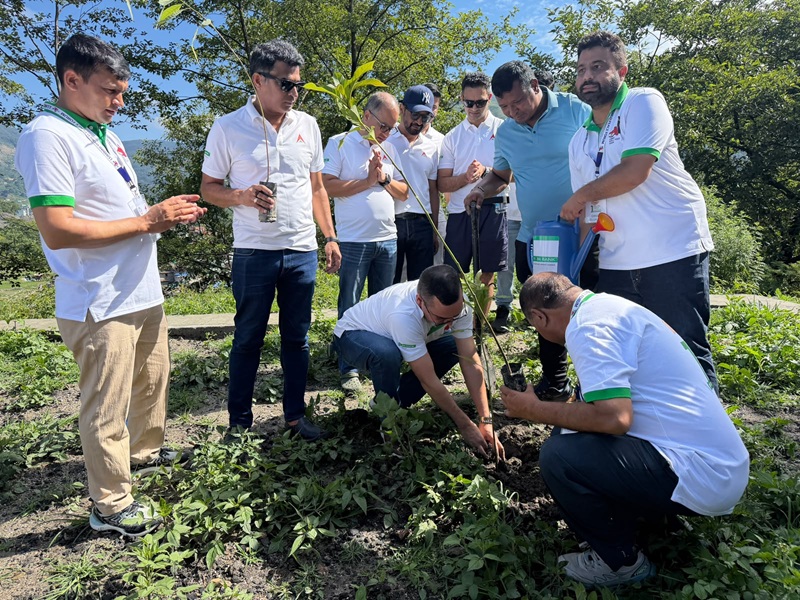
The environmental campaign ended with the successful planting of 200 high-yield avocado saplings at Gale Park, located within Tokha Municipality-2 in Kathmandu. The bank organized the localized plantation drive in close collaboration with the Lumbini World Peace Forum Nepal.
Local government heads from Tokha Municipality Ward Number 2 will directly oversee the long-term protection and growth monitoring of the newly planted trees. The public event recorded active participation from Nabil Bank Chief Executive Officer Manoj Kumar Gyawali, internal bank employees, local neighborhood residents, and Ward Chairperson Dharmendra Shrestha.
COMMITMENT TO ACTIVE SUSTAINABLE BANKING
Speaking at the project site, CEO Manoj Kumar Gyawali stated that the plantation drive reflects the bank’s strategy to transform its green financing vision into practical community actions. He emphasized that structured collaboration among corporate partners, local governments, and neighborhood clusters remains crucial to the success of these ecological campaigns.
The bank chief also stressed that simply planting saplings is never enough to create a lasting impact. He highlighted the vital importance of ongoing physical care, automated watering setups, and constant protection provided by local communities to ensure the trees reach full maturity.
PEOPLE, PLANET, AND PROSPERITY PILLARS
The financial institution noted that its core sustainable banking framework is built around three primary operational pillars, namely People, Planet, and Prosperity. As part of this vision, the bank runs its Nabil Sustainable Savings Account to encourage retail customers to participate in ecological responsibility.
Over the past five years, sustainable operations have shifted from a corporate social program into a core strategic priority for the commercial lender. The bank continues to embed strict environmental protection rules and carbon reduction checklists across its daily commercial loan approval channels.
Advertisement

SIGNIFICANT GREEN AND INCLUSIVE INVESTMENT METRICS
The banking enterprise highlighted its massive capital exposure across multiple eco-friendly production systems and inclusive trade sectors. The current green asset ledger includes the following vital funding allocations:
- NPR 51.83 billion directed into regional renewable energy grids.
- NPR 10.28 billion invested in low-emission clean transportation networks.
- NPR 54.28 billion allocated to support climate-smart agriculture projects.
- NPR 45.77 billion channeled to micro, small, and medium enterprises.
- NPR 48.60 billion set aside for targeted women entrepreneur financing programs.
- NPR 11.08 billion utilized to upgrade eco-tourism infrastructure facilities.
- NPR 5.84 billion deployed under specialized data-driven lending structures.
The commercial lending board reported that these massive capital injections have helped generate more than 112,000 active jobs inside Nepal, with women holding 31 percent of those new positions.
CORPORATE SOCIAL RESPONSIBILITY AND SOCIAL TRAINING
Over the past five operational years, Nabil Bank has invested a cumulative total of NPR 256 million into various corporate social responsibility initiatives. These funds support health clinics, rural schools, and disaster relief management workflows across all seven provinces.
Furthermore, through the specialized Nabil School of Social Entrepreneurship, the bank has successfully trained 1,577 local innovators. The specialized training academy helps young micro-entrepreneurs build scalable business models that solve local social problems while remaining financially self-sustainable.
MEASURABLE ENVIRONMENTAL IMPACTS AND DIGITAL SAVINGS
The bank published verified environmental metrics proving the performance of its green frameworks over the five-year tracking window. Through its extensive renewable energy financing, the firm has helped eliminate approximately 39,450.68 tonnes of carbon emissions.
Simultaneously, internal office digitization campaigns have successfully saved around 20 metric tonnes of physical paper. The deployment of automated workflow systems and smart office facilities saves approximately 262,804 liters of water annually across its corporate real estate network.
PROMOTING DIVERSITY AND EXPANDING DIGITAL INFRASTRUCTURE
The financial institution continues to champion gender inclusion within the national financial sector, noting that 39.15 percent of its current workforce is female. Additionally, 50 professional women currently lead critical local branches and specialized Strategic Business Units.
Nabil Bank currently serves a vast consumer base of more than 2.5 million customers through an extensive physical network consisting of 266 branch offices and 318 automated teller machines. The bank is rapidly shifting consumer transactions onto its modern nBank mobile application platform to drive paperless banking across Nepal.