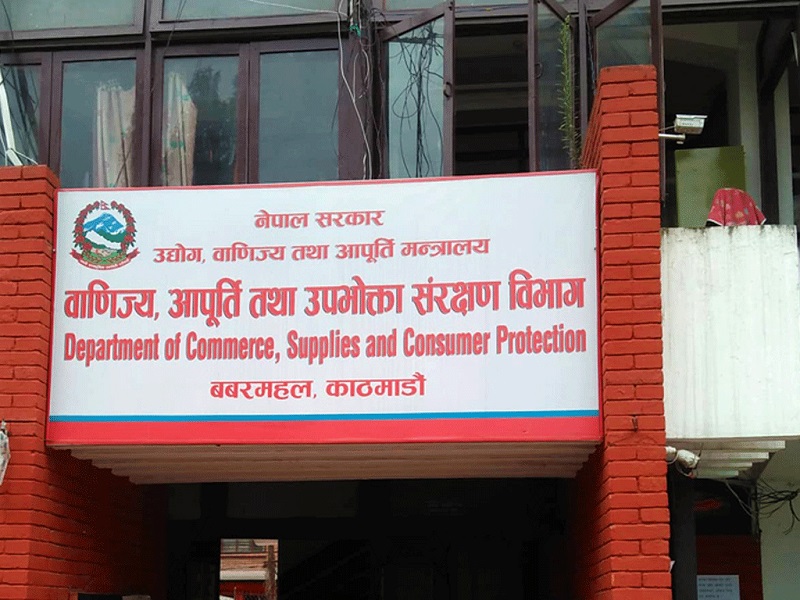
Department of Commerce raids 19 firms in Kathmandu

6th February 2026, Kathmandu
The Department of Commerce, Supplies and Consumer Protection has intensified its market monitoring operations in Kathmandu to curb unfair trade practices and protect consumer rights. In a recent regulatory drive conducted on February 4, 2026, the department inspected 19 different business firms across the Kathmandu Valley. This crackdown comes amid rising public concern over “unnatural” price hikes in daily essentials such as edible oil, rice, and pulses during the pre-election period.
Department of Commerce raids
The monitoring teams, often accompanied by consumer rights activists and local administration officials, are focusing on ensuring price transparency, proper labeling, and the prevention of artificial shortages.
Details of Penalized Firms and Violations
During the latest raid, two specific retail establishments were found in violation of the Consumer Protection Act, 2075. Both firms were slapped with immediate cash fines for failing to maintain business transparency or for engaging in activities contrary to consumer interests.
Shrestha Khadya Store: Located in Maitidevi, Kathmandu Metropolitan City Ward 30, this store was fined 10,000 rupees.
Ghimire Rijan Kirana Stores: Operating in Tokha Municipality Ward 7, this establishment was also penalized with a 10,000 rupee fine.
The department noted that these fines were issued under the summary powers of the Inspection Officer, as provided in the Consumer Protection Act, which allows for on-the-spot penalties ranging from 5,000 to 300,000 rupees.
Corrective Instructions and Documentation Orders
In addition to the monetary penalties, the department issued directives to 18 other firms to rectify minor irregularities or present additional business documentation.
Blast Fashion Collection: This firm has been formally instructed to appear at the department’s central office within three days. They are required to submit business-related documents, including registration certificates and purchase-sale bills, for further verification.
Corrective Directives for 17 Firms: These businesses received general instructions to improve their market conduct. Common directives included updating price lists (Mulyasuchi), ensuring proper labeling on packaged goods, and renewing expired business licenses.
Advertisement


Broader Regulatory Context and Market Trends
The recent “Department of Commerce raid” is part of a larger nationwide improvement campaign. On February 5, 2026, just one day after these inspections, the department issued a high-level directive to major producers and importers to halt “unjustified price hikes.”
Market analysis conducted in late January 2026 showed that while global inflation remained low, the price of mustard oil in local markets surged by 155 rupees per liter, and cumin (jeera) increased by 200 rupees per kg. The department is investigating these movements to determine if they are driven by genuine cost increases or by hoarding and syndicate-like behavior before the House of Representatives elections.
Common Violations Identified in 2026
Selling Date-Expired Goods: A frequent issue in grocery stores, leading to immediate disposal of stock and heavy fines.
Lack of Billing: Many firms fail to provide proper VAT or PAN invoices, making it difficult to track profit margins.
Artificial Shortage: Hoarding essential goods like cooking gas or edible oil to create a price surge.
Unlabeled Products: Selling loose or repackaged items without clear information on weight, ingredients, or the manufacturer.
Consumer Protection Framework
The government is operating under the Consumer Protection Act, 2075, which guarantees seven fundamental rights to every Nepali citizen, including the right to choose, the right to information, and the right to compensation.
Consumers who encounter overcharging or substandard goods are encouraged to report these incidents directly to the “Hello Sarkar” hotline or the Department’s online portal.
Conclusion
The recent action against 19 firms in Kathmandu highlights the Department of Commerce’s proactive stance against market irregularities. By combining on-the-spot fines for retailers like Shrestha Khadya Store with high-level directives for importers, the government aims to stabilize the cost of living. Business owners are reminded that compliance with pricing and labeling laws is mandatory, and regular surprise inspections will continue across all municipalities in the Kathmandu Valley.
For More: Department of Commerce raids