Digital Lumbini Blueprint: Master Plan Unveiled to Build a Regional IT Hub in Nepal

28th June 2026, Kathmandu
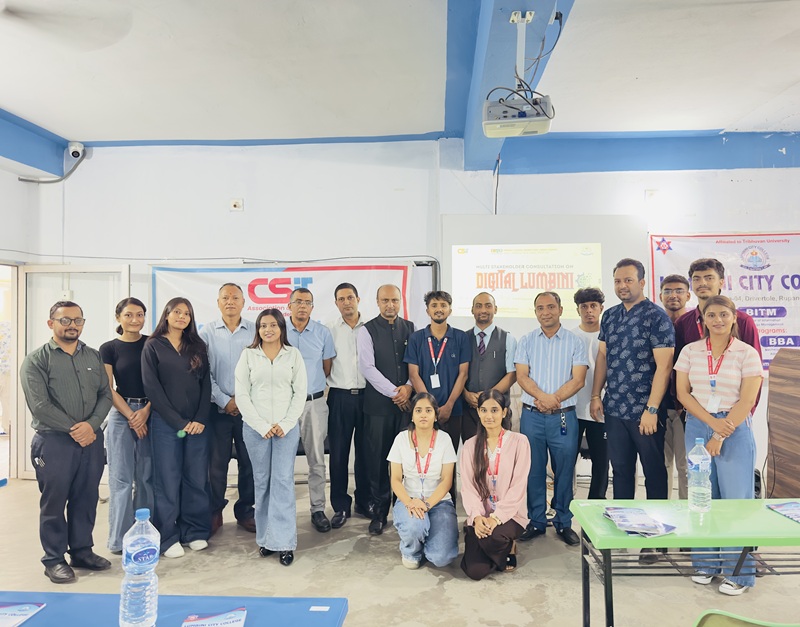
With a grand vision to accelerate digital transformation and establish Lumbini Province as a thriving, secure, and resilient regional IT hub, a high-level “Digital Lumbini: Multistakeholder Consultation” was successfully organized at Lumbini City College, Shankarnagar, Tillotama Nagarpalika.
Digital Lumbini Blueprint
The milestone event was hosted by the CAN Federation Lumbini Province and CAN Federation Rupandehi Branch, in collaboration with the CSIT Association of Nepal Rupandehi Chapter.
The consultation brought together top ICT professionals, academic leaders, tech entrepreneurs, and youth leaders to align strategies with the Lumbini Provincial Government’s digital mandate for the Fiscal Year 2026/27 (FY 2083/84).

ICT Leader Chiranjibi Adhikari’s Strategic Framework
The core anchor of the consultation was a comprehensive presentation based on the file named “Digital Lumbini”. Developed by renowned IT industry leader and CAN Federation Acting President Chiranjibi Adhikari, this conceptual framework outlines an ambitious “Dual-Engine Strategy.” The plan links the Kathmandu-Butwal Digital Corridor with the Butwal–Dang–Nepalgunj economic backbone, prioritizing Artificial Intelligence (AI), paperless e-governance, smart transport, integrated e-health, and modern digital education.
Strong Endorsement from Academia and CAN Federation
Welcoming the attendees, the Acting Campus Chief of Lumbini City College, Narayan Prasad Bhusal, highly praised the “Digital Lumbini” roadmap. He emphasized that this master plan, developed by ICT leader Chiranjibi Adhikari, will serve as a definitive milestone for the socio-economic advancement of the region, receiving wholehearted backing from the college.
Presiding over the program, CAN Federation Lumbini Province President Narayan Khanal stated that driving such an advanced initiative is a proud moment for the federation. He expressed an unyielding commitment to fully executing this local tech-driven campaign across all administrative and economic zones in the province.
Empowering Youth, Boosting Local Startups, and Stopping Brain Drain
Addressing the assembly, CSIT President Kalpit Nepal advocated for localized IT project funding, industry-friendly academic curricula, and tech skill-set development within the community. Concurrently, CAN Federation Rupandehi Branch President Jiwan Adhikari spoke on leveraging tech for youth empowerment to foster holistic national development.
Advertisement

Highlighting the need for a sustainable tech ecosystem, the Founder President of the Lumbini Tech Innovation Center (LTIC), Dhan Bahadur Rana, shed light on efforts to foster a “Made in Nepal” software ecosystem. He quoted:
“Bridging the regulatory gap by introducing progressive startup legislation, creating localized technology hubs, providing startup seed funding, and aggressively promoting locally developed software ecosystems is vital to stop youth brain drain and build an authentic international brand presence for Nepalese tech.”
Key Pillars of the Digital Lumbini Master Plan
Public-Private Partnership (PPP Model): Collaboration leveraging regulatory approvals from the Government, investments from the Private Sector, talent from Academia, and advisory/funding support from Development Partners like the UNDP.
Provincial Cybersecurity Framework: Formulating a robust minimum security standard to protect the civil e-registry, encrypted health records (HDHMIS), and smart governance portals from emerging threats.
Smart Tourism Scaling: Replacing outdated billboards with interactive QR storyboarding, multilingual audio/video guides, and AR/VR immersive tours across major heritage landmarks, including the Lumbini Garden, Maya Devi Temple, and Ashoka Pillar.
The conference concluded successfully, with all core pillars signing off on the collaborative implementation roadmap to turn the provincial digital dream into an immediate reality.
For more: Digital Lumbini Blueprint