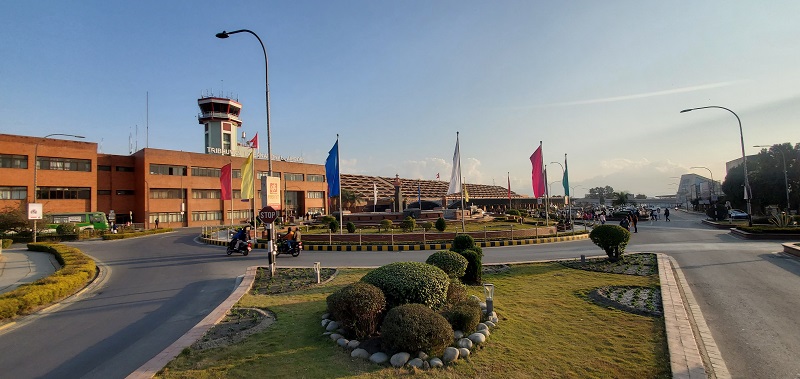
Civil Aviation Office Of Tribhuvan International Airport Introduces New Airside Safety Operation Procedure

26th July 2026, Kathmandu
The Civil Aviation Office of Tribhuvan International Airport has introduced a new Airside Safety Operation Procedure designed to strengthen airport security, improve operational efficiency, and align Nepal primary international gateway with global aviation standards.
New Airside Safety Operation Procedure
The updated operational guidelines, approved by the airport General Manager, establish rigorous compliance measures across restricted airside zones.
The safety procedure introduces enhanced controls focusing on passenger safety, restricted area monitoring, waste management, and operational discipline for all ground handling and technical personnel.

Strict Ban On Unauthorized Photography And Videography
Under the revised directive, taking photographs, recording videos, or capturing visual footage inside secure and restricted airport zones without prior written authorization is strictly prohibited.
The regulation also bans uploading or publishing any unauthorized airside visual content on social media channels. Authorities confirmed that individuals violating these security guidelines will face legal action and administrative penalties under applicable civil aviation security laws.
Random Breath Alcohol Testing For Airside Staff
To maintain maximum operational safety on the apron and maneuvering areas, the new procedure introduces mandatory random breath alcohol testing for ground staff.
Key operational details regarding staff monitoring include:
Personnel Covered
The testing protocol applies to drivers, ground handling crews, ramp operators, and technical maintenance personnel working in airside zones.
Inspection Timing
Screening may be conducted randomly prior to shift reporting or during active duty hours.
Penalties For Non Compliance
Advertisement

If an employee tests positive for alcohol or controlled narcotic substances, their airside access pass will be immediately revoked, alongside formal disciplinary action under airport security regulations.
Enhanced Passenger Transport Safety Guidelines
The directive introduces revised standard operating procedures for handling and transporting passengers across the apron area:
Ambulift Requirement
Passengers using wheelchairs or requiring specialized mobility assistance must be transported to and from aircraft using dedicated ambulift vehicles.
Engine Shutdown Protocol
Passenger transfer buses are strictly prohibited from approaching an aircraft until the engines have been completely shut down, minimizing jet blast risks and operational hazards on the ramp.
Waste Management Controls To Reduce Bird Strike Risks
Given the proximity of Tribhuvan International Airport to the Bagmati and Manohara rivers, bird strike hazards remain a key operational concern for flight safety.
To mitigate wildlife risks on the airfield, the procedure bans the disposal of open food and organic waste in ramp areas. Exposed waste attracts birds and stray animals into active taxiways and runway paths. Under the new rules, ground operators must collect all waste in covered, secure containers and guarantee same-day removal from airside premises.
Mandatory Daily Runway Inspections
Because Tribhuvan International Airport operates with a single runway handling both domestic and international traffic, maintaining runway surface integrity is critical.
The updated procedure mandates twice-daily scheduled runway inspections to check for foreign object debris, surface cracking, and rubber accumulation. In addition to routine daily checks, emergency inspections will be conducted during severe weather events or abnormal operational conditions to ensure uninterrupted runway safety.
For More: New Airside Safety Operation Procedure