Nepal Insurance Authority deploys massive capital reserves into high yield fixed deposits

21st May 2026, Kathmandu
The financial sector in Nepal is witnessing a significant deployment of public funds as institutional regulators optimize their liquid capital reserves. In a major move aimed at securing stable returns while ensuring the absolute safety of its corporate funds, the Nepal Insurance Authority has officially launched a competitive bidding process.
NIA investment proposals
The national regulatory body has issued a formal public invitation for confidential sealed proposals, calling on all interested commercial banks and national development banks to compete for a substantial piece of institutional fixed deposit investment capital.

Regulatory Mandate Drives Strategic Capital Allocation Plan
This massive deployment of cash assets is not an arbitrary financial decision but a direct execution of established corporate governance guidelines. According to the official public notice published in late May, the apex regulatory body is legally bound to place its available bank balances into secure interest bearing instruments in strict accordance with its long term institutional investment policy. By shifting these idle cash balances into structured bank fixed deposits, the organization ensures that its vast financial reserves are actively generating income, which ultimately backs the stability of the entire insurance marketplace across the nation.
Tight Seven Day Window Demands Quick Institutional Responses
The national insurance supervisor has established a highly compressed and strict timeline for the submission of all corporate bidding documents to maintain high operational efficiency. Participating banking institutions must finalize their financial offers and deliver their completed sealed envelopes to the collection center within a strict window of seven days from the initial date of notice publication. This short timeframe requires treasury managers at competing commercial and development banks to quickly analyze their current liquidity requirements and formulate highly competitive interest rate packages to attract this premium institutional client.
Extended Bid Validity Rules Protect Against Market Fluctuations
To safeguard the selection process from rapid shifts in the domestic money market, the regulatory body has put in place strict baseline rules regarding proposal longevity. The authority has explicitly stated that the validity period of all submitted sealed proposals must remain active for an absolute minimum of fifteen days following the final submission closing date. This mandatory holding period gives the internal evaluation committee enough time to thoroughly review each application, run comparative financial analyses, and make final allocation decisions without the risk of banks prematurely changing or withdrawing their offered interest rates.
Advertisement

Strict Disclosure Guidelines Prevent Hidden Financial Vulnerabilities
The evaluation criteria designed by the regulatory body go far beyond simply picking the highest offered yield. To protect public funds from systemic banking risks, the apex authority has mandated that all applying financial institutions must submit a comprehensive set of internal institutional and financial performance indicators along with their primary interest rate bids. Banks are strictly required to include their latest quarterly financial statements, a detailed review of their corporate profit and loss status spanning the past three consecutive fiscal years, and their exact current non-performing assets ratio.
Prudent Risk Metrics Guide the Selection Committee Evaluations
The comprehensive disclosure package must also feature other critical risk and stability metrics that reveal the true operational health of the bidding banks. Lenders are required to clearly present their current credit-to-deposit ratio, their official historical year of establishment under the Nepalese calendar, and their overall capital adequacy ratio. The selection committee will evaluate these indicators alongside the offered returns, ensuring that capital is only deployed into stable, highly capitalized banks that maintain healthy cash cushions and low bad loan exposures.
Kupandole Headquarters Directs the National Insurance Superstructure
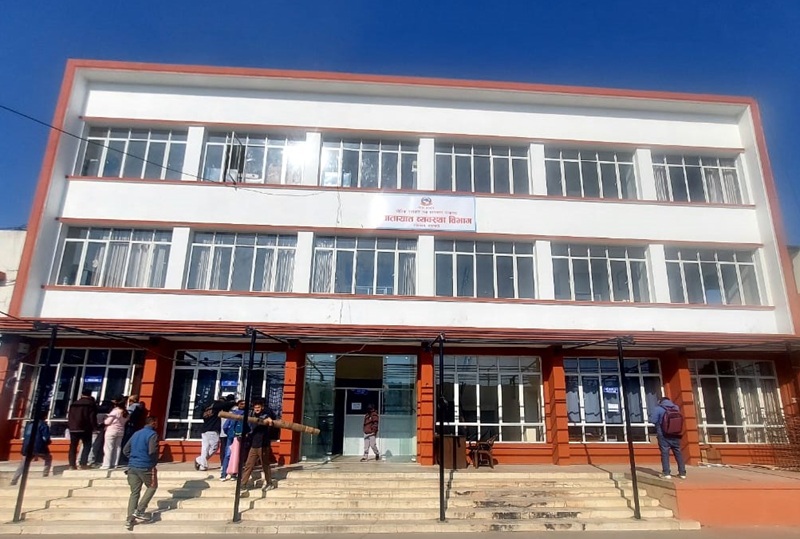
The administrative center managing this large scale financial deployment is situated at the main corporate headquarters of the Nepal Insurance Authority, located in the prominent Kupandole district of Lalitpur. As the sole apex regulator of the domestic insurance sector, this state institution is uniquely tasked with supervising insurance company operations, drafting premium investment guidelines, and managing complex financial governance. By executing this transparent fixed deposit tender, the central authority sets a highly commendable benchmark for how state regulators should handle institutional liquid funds with complete fiscal responsibility.
Institutional Tenders Stabilize the Broader Commercial Banking Network
Ultimately, the release of this massive fixed deposit investment notice creates a highly positive ripple effect across the wider financial landscape of Nepal. For commercial and development banks currently managing tight liquidity positions or seeking to balance their credit-to-deposit lines, securing a portion of these stable regulatory funds provides an excellent avenue to strengthen their deposit bases. This close partnership between apex regulatory bodies and national commercial banks highlights the growing maturity of the financial ecosystem, where public capital is systematically directed to support banking stability while maximizing institutional revenue.
For More: NIA investment proposals