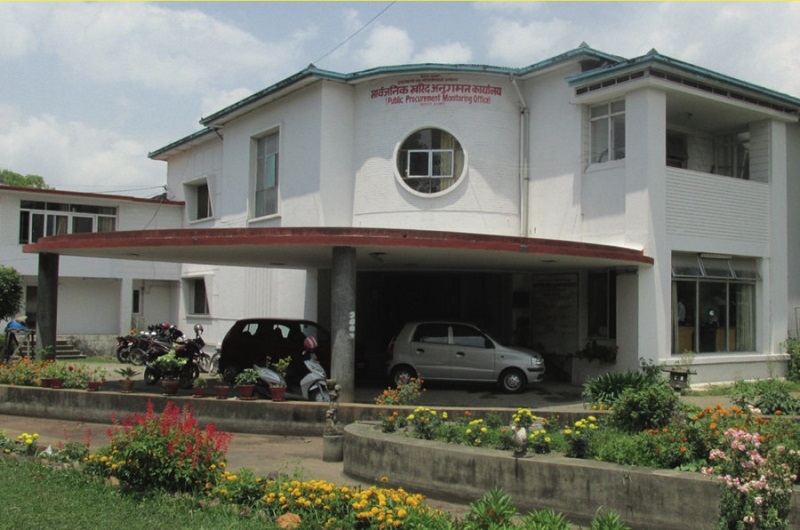
Public Procurement Monitoring Office Blacklists Four Construction Companies and Joint Ventures

7th August 2026, Kathmandu
The Public Procurement Monitoring Office operating under the Government of Nepal has officially placed four construction firms and joint ventures on its administrative blacklist.
PPMO Blacklists Construction Companies
The regulatory action follows formal recommendations submitted by various local municipalities and state infrastructure development project offices. The administrative decision was executed in accordance with Section 63 Subsection 1 of the Public Procurement Act 2007. During their respective penalty periods, all designated contractors and partner companies will be legally barred from participating in government procurement processes or submitting bids for public infrastructure projects across the country.
The Public Procurement Monitoring Office regularly monitors the performance of government contractors to ensure transparency, accountability, and timely completion of public development contracts. When contractors fail to fulfill contractual obligations, delay infrastructure projects, or violate procurement rules, government entities recommend administrative penalties. The enforcement of Section 63 Subsection 1 of the Public Procurement Act serves as a key governance mechanism to maintain project standards and protect public financial resources.

Details of Blacklisted Individual Construction Companies
Among the penalised firms, Indrayani Builders and Suppliers Private Limited, located in Kathmandu, has been blacklisted for a duration of one year and six months. The administrative penalty was imposed following a formal recommendation from Dipayal Silgadhi Municipality. The construction firm is owned by Ashok Gaire. The municipality requested disciplinary action after evaluating the performance and contractual compliance of the firm regarding local infrastructure development projects.
Similarly, Apan Nirman Sewa, based in Lalitpur, has been blacklisted for a period of two years. The Public Procurement Monitoring Office took this action following a recommendation from Saptakoshi Municipality. The firm is owned by Santosh Kumar Paikara. Under the blacklisting order, the company and its proprietor are prohibited from competing in any municipal, provincial, or federal public procurement tenders for the entire two year suspension period.
Three Year Debarment for Joint Ventures
The Public Procurement Monitoring Office also issued maximum three year debarment orders against two major joint ventures due to serious contractual non compliance.
Khaptad BLB Namadeu Joint Venture, based in Bajhang, has been blacklisted for three years following a formal recommendation submitted by Thalara Rural Municipality. The joint venture comprises three separate construction entities: Khaptad Nirman Sewa owned by Tulsi Khadka, BLB Construction and Suppliers Private Limited owned by Bharat Bahadur Kathayat, and Namadeu Nirman Sewa owned by Amrita Mahara. Because all constituent partners share joint liability under public procurement regulations, each individual firm and its respective proprietor will remain barred from government tenders throughout the three year period.
The second joint venture facing a three year ban is MR Aryan Joint Venture. The penalty was enforced following a recommendation from the Irrigation and Water Resources Management Project based in Rajbiraj. The joint venture consists of Aryan Construction Multipurpose Private Limited from Udayapur, owned by Ashish Lama, and MR Construction from Chitwan, owned by Ram Bahadur Thapa. Both partner companies and their owners will face a complete restriction from participating in public infrastructure bidding processes during the designated timeframe.
Advertisement

Regulatory Context and Enforcement of Procurement Laws
Under Section 63 Subsection 1 of the Public Procurement Act 2007, the Public Procurement Monitoring Office possesses the statutory authority to blacklist defaulting firms, suppliers, consultants, and joint ventures based on recommendations from public entities. Public entities initiate recommendations when contractors fail to execute work within stipulated deadlines, abandon project sites, submit fraudulent documentation, or breach fundamental contractual terms.
The blacklisting process involves a formal evaluation of the recommendations provided by project offices. Once the monitoring office executes a debarment decision, the affected entities are listed on the central public registry. The restriction applies universally across all government ministries, departments, public corporations, provincial bodies, and local municipal authorities in Nepal.
Impact on Public Infrastructure and Contractor Accountability
The debarment of construction firms and joint ventures highlights growing government efforts to enforce contractor accountability across rural and urban development projects. Delayed or poorly executed infrastructure projects severely hinder local economic growth, impede transport and irrigation access, and strain public financial resources.
By barring non compliant contractors from future public bids, the Public Procurement Monitoring Office aims to create a strong deterrent against contract abandonment and negligence. The public disclosure of company names, partner firms, and individual owner details ensures that defaulting contractors cannot participate in government tenders through alternate entities or newly formed joint ventures during their debarment periods.
Administrative Implications for Joint Venture Partners
Joint venture agreements are commonly used in public procurement to combine technical qualifications, machinery, and financial capacity to meet tender eligibility requirements. However, public procurement rules establish joint and several liability among all partner entities forming a joint venture.
When a joint venture is blacklisted, every constituent firm and its respective proprietor face equal administrative consequences regardless of internal operational divisions. The three year bans imposed on Khaptad BLB Namadeu Joint Venture and MR Aryan Joint Venture illustrate the significant corporate risks involved when joint venture partners fail to deliver project commitments. Construction firms must therefore exercise rigorous due diligence when selecting joint venture partners for public sector contracts.
Conclusion and Legal Consequences
The recent decision by the Public Procurement Monitoring Office underscores the strict enforcement of legal standards within Nepal public procurement framework. For the duration of their respective penalties, ranging from eighteen months to three years, the four blacklisted entities and their seven owner proprietors cannot submit bid documents, receive contract awards, or participate in public sector tenders.
Government agencies across Nepal will enforce these restrictions during tender evaluation processes to ensure that blacklisted entities are systematically excluded from public contract awards. The continued monitoring and penalisation of defaulting contractors remain essential for strengthening public governance, improving construction quality, and ensuring the timely delivery of vital infrastructure projects.
For More: PPMO Blacklists Construction Companies