Prime Minister Balen Shah’s UNGA Address Puts Climate Justice and the “Himalayan Tsunami” on the Global Stage

26th September 2026, Kathmandu
At the 81st session of the United Nations General Assembly (UNGA), Prime Minister Balendra (Balen) Shah delivered a powerful address that has drawn international attention to the severe impacts of climate change on vulnerable mountainous regions. Highlighting devastating events like the recent Bhote Koshi-Trishuli floods as a “Himalayan tsunami,” Prime Minister Shah sternly asked the global community: “Have you really heard that warning?”
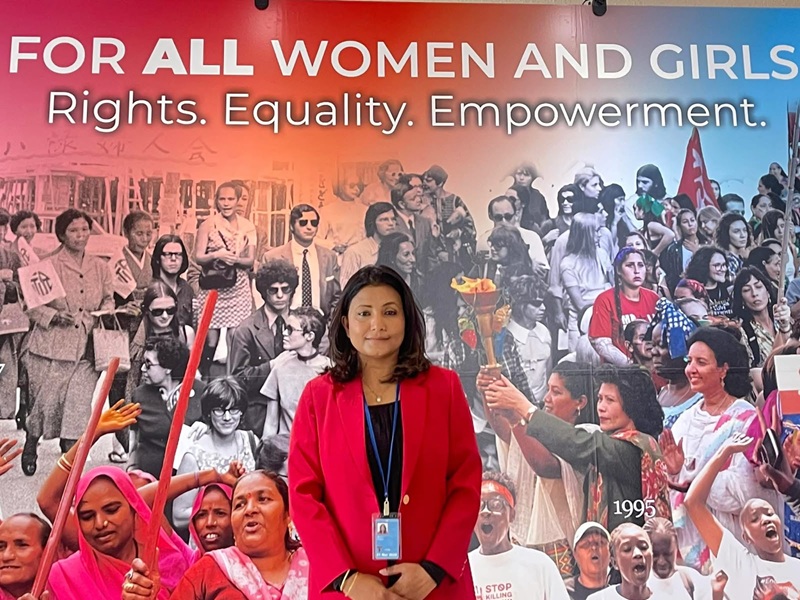
The speech has sparked widespread praise from environmental experts, policy makers, and community leaders. Among them, Prajita Karki, Chairperson of the Sathsaathai Foundation, a prominent organization dedicated to climate justice and community resilience—has offered strong backing for the Prime Minister’s remarks.
Amplifying Nepal’s Pain: Why Climate Justice Matters
Reacting to the address, Chairperson Karki praised the Prime Minister for effectively articulating the profound grief, trauma, and structural destruction faced by local communities.
“The Prime Minister presented our pain and suffering very well. He used the term ‘Himalayan tsunami’—we have experienced and witnessed that, but he also questioned the world by asking, ‘Have you really heard that warning?’ This is truly commendable.” Prajita Karki, Chairperson, Sathsaathai Foundation
Karki emphasized that the unfolding climate catastrophe in the Himalayas cannot be dismissed as mere natural misfortune. Instead, it is an urgent global crisis. Despite contributing an infinitesimally small fraction to global greenhouse gas emissions, nations like Nepal are forced to bear a disproportionate burden of destruction.
Displacement and “Climate Refugees”: Unchecked glacial melting and extreme weather events have displaced thousands, destroying homes and turning resilient mountain populations into climate refugees.
Loss of Life and Civilization: While concrete roads and physical structures can eventually be rebuilt, lost human lives, indigenous heritage, and centuries-old civilizations cannot be recovered.
Advertisement

The True Definition of Justice: Karki noted that real climate justice extends far beyond short-term financial compensation or basic reconstruction; it requires ensuring a safe, secure, and dignified future for those who have lost everything.

Key Takeaways from PM Balen Shah’s UNGA Address
Prime Minister Shah’s address went beyond standard diplomatic talking points, anchoring its narrative on core elements that define the modern ecological crisis:
The “Himalayan Tsunami” Warning: Highlighting how warming temperatures destabilize fragile mountain ecosystems, trigger melting permafrost, and cause catastrophic flash floods across borders.
A Broken Global System: Pointing out the deep global inequalities where military logistics and weapons cross borders seamlessly, while vulnerable nations struggle with basic food logistics, fuel, and survival resources.
The Call for Real Accountability: Stressing that relief mechanisms must move past bureaucratic bottlenecks and deliver meaningful, grant-based support to nations on the frontline of the climate crisis.
Moving Forward: From Warning to Action
As global leaders digest the messages emerging from the 81st UNGA, civil society leaders like Prajita Karki underline that the international community must treat the Himalayan warning seriously. Ensuring that disaster survivors can live with safety and dignity remains the ultimate benchmark of whether global climate commitments are working in practice.
For more: Prime Minister Balen Shah’s UNGA Address