Trade Union Rights Under Threat in Nepal: ITF General Secretary Stephen Cotton Issues Global Warning

2nd May 2026, Kathmandu
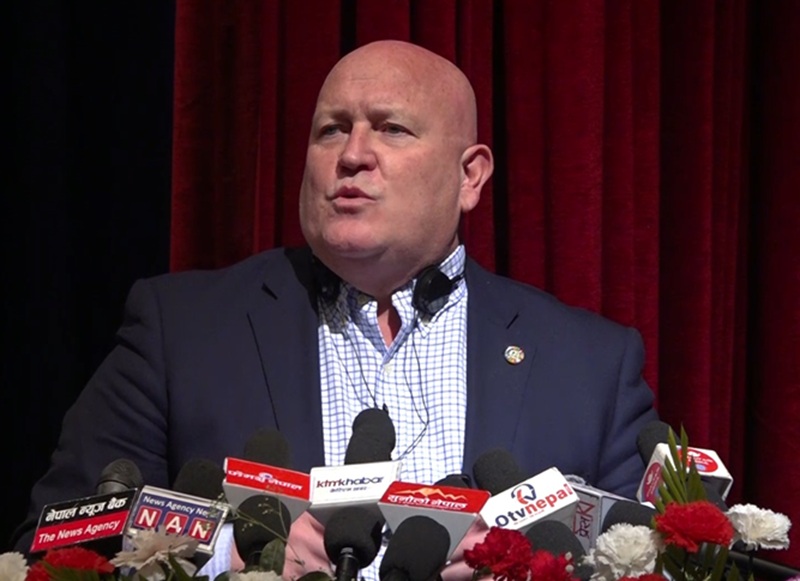
Stephen Cotton, General Secretary of the International Transport Workers’ Federation (ITF), has urged the Nepal government to ensure workers’ rights through meaningful dialogue with local trade unions.
Trade Union Rights Under Threat in Nepal
Speaking at the national council inauguration of the Nepal Trade Union Congress (NTUC) in Kathmandu on Friday, Cotton emphasized that democracy cannot thrive without strong, independent trade unions.
The global labor leader expressed deep concern over proposed legislative changes that threaten the freedom of association in Nepal’s public sector.

Key Concerns Regarding the Federal Civil Service Act
A major focus of Cotton’s address was the draft of the Federal Civil Service Act. He characterized the removal of provisions ensuring the “freedom of association” as an unacceptable move that undermines the rights of public sector workers.
“The Federal Civil Service Act brought by the government attempts to curtail the rights of workers in public sectors and raises serious concerns regarding social dialogue,” Cotton stated. “We call on the government to initiate constructive dialogue to resolve these issues in a democratic manner.”
Global Labor Support: 17 Million Workers Strong
Representing over 17 million transport workers globally, Cotton reiterated that the international community is closely monitoring the situation in Nepal. He asserted that an attack on trade union rights in Nepal is perceived as an attack on workers worldwide.
He further highlighted the global economic pressures facing laborers, noting that conflicts like the Iran war have spiked inflation, severely impacting the livelihoods of workers.
Advertisement

Highlights from Stephen Cotton’s Address
Democratic Foundation: Independent trade unions are essential for a flourishing democracy.
Global Solidarity: “We will not flee from difficult situations; we will come from all over the world to Nepal and fight together,” Cotton promised.
Fundamental Rights: Freedom of association, collective bargaining, and decent work are not partisan issues but the foundation of a just society.
The Call for Meaningful Social Dialogue
The ITF General Secretary urged the Nepal government to move away from unilateral decision-making and embrace social dialogue. He emphasized that workers’ rights are a fundamental pillar of justice and that the government’s role is critical in protecting these democratic practices.
As Nepal undergoes political and administrative transitions, labor leaders argue that it is more important than ever to safeguard the legal protections that allow unions to operate without interference.
Conclusion: A United Front for Labor Rights
The presence of a high-ranking international labor leader in Kathmandu sends a clear message: Nepal’s domestic labor policies are now under the international spotlight.
Stakeholders believe that the government’s response to these concerns will define its commitment to democratic values and international labor standards.
For more: Trade Union Rights Under Threat in Nepal