CNI President Birendra Raj Pandey Urges Capital Market Overhaul For Nepal’s Industrialization

6th September 2026, Kathmandu
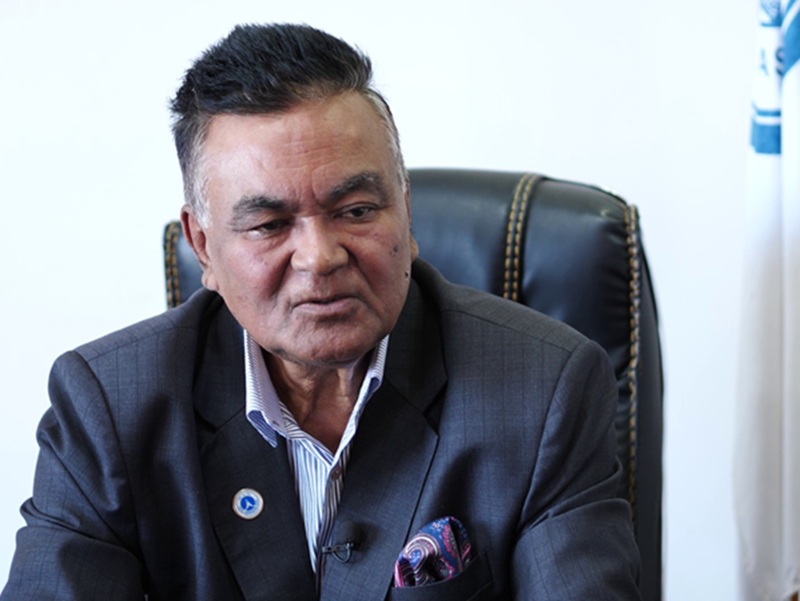
Birendra Raj Pande, President of the Confederation of Nepalese Industries (CNI), stated that Nepal’s capital market must be developed as a major financial engine for economic growth.
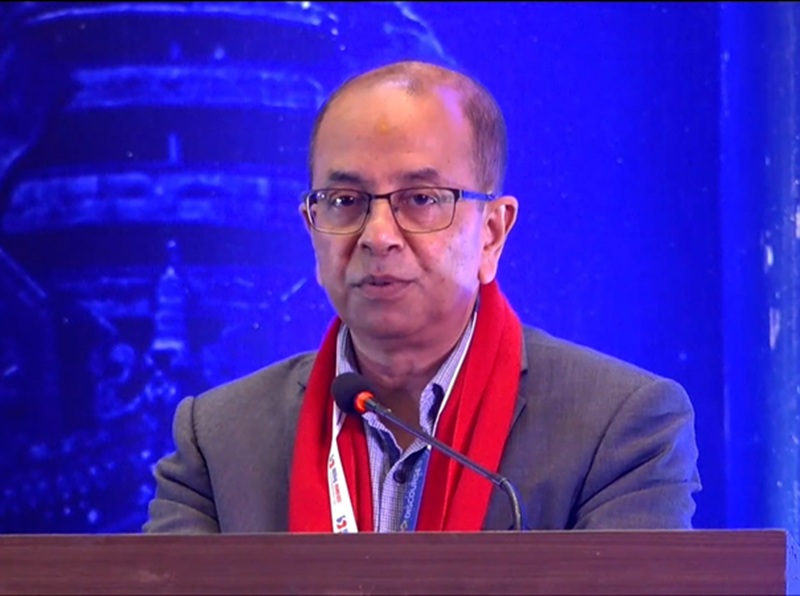
Addressing the “Nepal Capital Market Discourse-2026” organized by Banking Samachar and mainly sponsored by Nasa Securities, President Pande emphasized that the capital market should not be viewed merely as a medium for share trading, but as a medium for mobilizing long-term capital into productive sectors such as industries, infrastructure, energy, and agriculture.
He stated, “The true objective of the capital market is to transform savings into productive investments. Today, millions of Nepalese citizens are saving from their incomes. The capital market should become a vehicle to channel these scattered savings into long-term capital for industries, infrastructure, energy, agriculture, and other productive sectors. In that sense, the capital market is not just a financial market, but also the financial infrastructure for Nepal’s industrialization and economic transformation.”
He further stressed that the capital market must be developed as the financial foundation for Nepal’s industrialization and economic transformation.
Noting that Nepal has long depended on an economic growth model reliant on remittances, consumption, and imports, Pande pointed out that the country must now shift toward an economic growth model driven by investment, production, productivity, innovation, and exports.
“It is necessary to make industrial expansion, infrastructure development, commercialization and modernization of agriculture, tourism expansion, and information technology and the digital economy the new engines of economic growth,” he added.
Advertisement

According to Pande, creating large-scale employment in the country also requires long-term and massive capital. While the banking system is an important foundation for Nepal’s economic development, bank loans alone cannot fulfill the entire financial requirements of infrastructure, industries, and long-term projects, he noted. Therefore, alongside the banking system, the capital market must be developed as another key financial engine for economic development, he added. Pande stated that achieving CNI’s vision of a USD 100 billion economy with double-digit economic growth requires a broad, diversified, credible, and long-term capital market.
Pande acknowledged the recent expansion of Nepal’s capital market as a positive development. According to him, there are currently over 7.5 million Demat accounts and more than 6.5 million “Mero Share” users in Nepal.
He remarked, “The progress we have achieved is also remarkable. In this context, we must view the expansion of Nepal’s capital market in recent years positively. Today, having over 7.5 million Demat accounts and more than 6.5 million Mero Share users is a major transformation in itself. Compared to where we were a decade ago, this is a significant achievement.”
Mentioning that the total market capitalization of Nepal’s stock market has reached around 66% of the Gross Domestic Product (GDP), he stated that the capital market is no longer a marginal part of the economy, but rather an essential component. However, he cautioned that market expansion should not be evaluated solely on the basis of increases in the NEPSE index.
He concluded, “Similarly, the total market capitalization of Nepal’s stock market has now reached around 66% of the GDP. This shows that the capital market is no longer a marginal part of Nepal’s economy; it has become a vital component of the economy itself.” Emphasizing that the expansion of the capital market must impact the real economy, he warned that development would remain incomplete if the capital market is growing without its impact reflecting on production, employment, and investment.
For more: CNI President Urges Capital Market