Minister Deepak Kumar Sah Uses Engineering Frameworks to Solve Nepal’s LPG Gas Shortage

22nd September 2026, Kathmandu
Nepal’s Industry Minister Deepak Kumar Sah addresses the LPG gas crisis using technical tools like Fishbone Diagrams, PERT Analysis, and Critical Path Method to streamline supply chains.
Minister Sah Uses Engineering Frameworks
Government Applying Engineering Frameworks to Resolve Nepal’s LPG Gas Shortage: Minister Deepak Kumar Sah
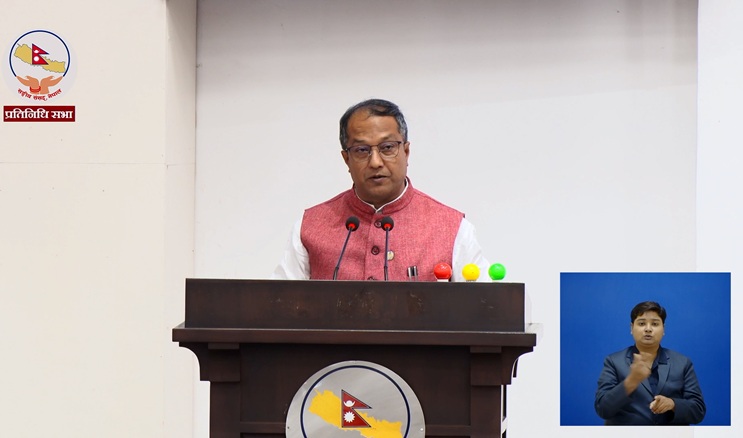
Minister for Industry, Commerce, and Supplies Deepak Kumar Sah informed the House of Representatives that the government is utilizing technical and analytical frameworks including Fishbone Diagrams, Program Evaluation and Review Technique (PERT) Analysis, and the Critical Path Method (CPM) to identify and resolve the root causes of the ongoing Liquefied Petroleum Gas (LPG) shortage in Nepal.
Speaking during a parliamentary session, Minister Sah stated that as a techno-economic engineer, he is examining the entire supply ecosystem—from loading points to consumer kitchens—rather than treating the shortage as a simple volume calculation.

Technical Root-Cause Analysis via Fishbone Diagram
To address the shortage systematically rather than blaming a single agency, the Ministry conducted a technical analysis using an Ishikawa (Fishbone) diagram. The framework identified several interconnected drivers behind the LPG supply disruption:
Import Dependency & Market Volatility: Heavy reliance on external imports and fluctuations in international fuel prices.
Infrastructure & Storage Bottlenecks: Limited storage capacity, refilling delays, and uneven geographical distribution of dealer service centers.
Distribution Failures: Slower return rates of empty cylinders, lack of digital tracking, and market malpractices like black marketing.
Inter-Agency Coordination Gaps: Delayed communication between transport, road infrastructure, and regulatory bodies.
Advertisement

Logistical Interventions: PERT & Critical Path Method
To restore gas distribution quickly, the Ministry applied PERT analysis and the Critical Path Method across the supply chain.
The evaluation identified the road blockage at Krishnabhir as the primary bottleneck on the critical path. The Ministry immediately coordinated with the Director General of the Department of Roads to expedite landslide clearing and highway maintenance.
Key Emergency Operations Conducted:
Alternative Logistics Routing: Between Bhadra 10 and Bhadra 20, when the main highway was disrupted at Krishnabhir, gas was refilled at Terai bottling plants and rerouted into Kathmandu Valley via the Tribhuvan Highway and BP Highway, delivering approximately 40,000 cylinders daily.
Increased Import Requests: On Shrawan 21, the government formally requested the Government of India to supply 60,000 metric tons of LPG monthly for three consecutive months.
Quick Response Mechanism: A dedicated Quick Response Team was established on Shrawan 20 to address public complaints and resolve local supply blockages.
Year-over-Year LPG Supply Growth Data
Addressing claims of reduced supply, Minister Sah presented official delivery metrics demonstrating significant year-over-year increases in LPG cylinder distribution across the country:
| Month / Period | Supply & Distribution Increase (YoY) | Key Operational Focus |
| Shrawan | +29.40% | Setup of Quick Response Team & Indian import request |
| Bhadra | +25.56% | Rerouting via BP & Tribhuvan Highways (~40k cylinders/day) |
| Ashwin (First 4 Days) | +69.58% | Rapid clearance at Krishnabhir bottleneck |
Long-Term Policy & Clean Energy Shift
For long-term energy security, the Ministry has formed an internal committee and formally requested policy guidelines from the National Planning Commission (NPC) regarding infrastructure expansion and strategic fuel reserves.
Additionally, to reduce immediate household reliance on LPG, the Alternative Energy Promotion Centre (AEPC) has initiated the distribution of 300 electric induction stoves, with application submissions closing at 2:00 PM on the 8th.
Minister Sah expressed gratitude to employees at the Ministry of Industry, Nepal Oil Corporation (NOC), AEPC, security personnel, and private sector partners working to restore full market stability.
For more: Minister Sah Uses Engineering Frameworks