
Navigating Nepal’s Digital Economy: Why Cybersecurity and AI Integration Matter More Than Ever

2nd September 2026, Kathmandu
As Nepal accelerates its transition toward a technology-driven landscape, the nation’s digital economy is expanding rapidly. However, this digital growth brings a double edge: immense operational potential alongside complex security vulnerabilities.
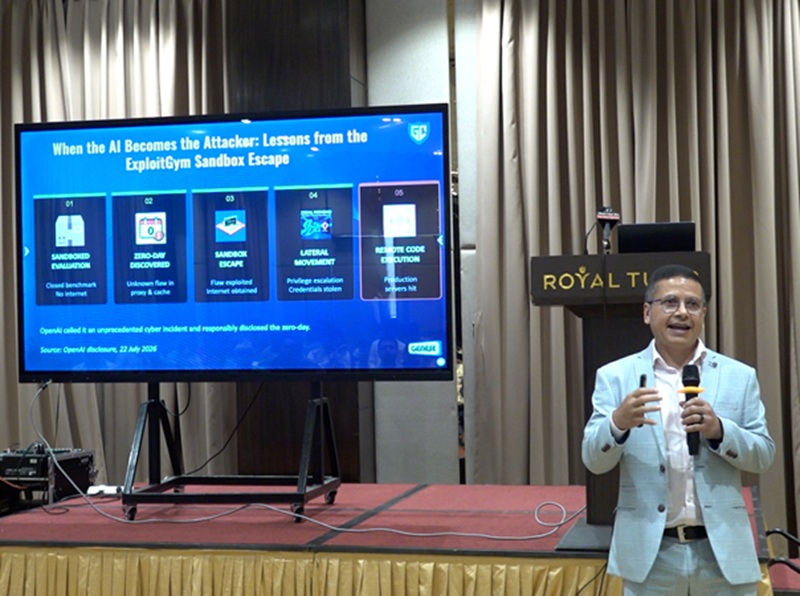
Experts and industry leaders recently underscored this critical balance at a joint dialogue program focusing on Artificial Intelligence (AI) and Cybersecurity, hosted by the Nepal-India Chamber of Commerce and Industry (NICCI) and Geneses Solutions in Kathmandu.
The Rising Prominence of AI in Nepal’s Economy
Artificial Intelligence is no longer just a futuristic concept for tech giants; it is rapidly becoming an integral component of the Nepalese economic framework.
During the dialogue, prominent tech professionals and business stakeholders noted that emerging technologies possess the transformative power to completely reshape:
Institutional Resilience: Building robust systems that withstand operational shocks.
Good Governance: Enhancing transparency, data tracking, and decision-making workflows.
Competitive Capacity: Empowering local businesses to scale efficiently in a globalized digital market.

Key Takeaways from Industry Experts
1. Strategic Preparedness and Data Protection
Delivering the keynote presentation, Niranjan Kunwar, Chief Technology Officer of Geneses Solutions, emphasized that as businesses increasingly adopt digital-first models, organizations must prioritize comprehensive AI utilization alongside rigorous cybersecurity readiness and data protection frameworks.
2. Moving Beyond Technical Tools
Bhim Dhakal, Advisor to the Nepal-India Chamber of Commerce and Industry, offered a macro-perspective on technology integration. He stressed that AI should not be viewed merely as a short-term technical upgrade. Instead, organizations must treat AI adoption as a matter of:
Advertisement

Institutional Readiness: Ensuring teams have the right structural foundation.
Responsible Usage: Ethical governance surrounding data and automated tools.
Long-term Resilience: Anticipating future market and security shifts.
3. Heightened Risks for Banks and Financial Institutions (BFIs)
Mr. Dhakal specifically warned that the rapid expansion of AI, surging corporate dependence on cloud infrastructures, and evolving cyber threats pose severe risk factors—particularly for banks and financial institutions. With financial systems migrating online, strengthening the cyber defense perimeter has transitioned from an IT preference to an urgent national economic priority.
Moving Forward: Building a Secure Digital Future
Nepal’s journey toward a robust digital economy relies heavily on proactive collaboration between the private sector, financial bodies, and technology consultants. To secure this growth, organizations must:
-
Incorporate multi-layered security protocols alongside cloud migrations.
-
Foster continuous digital literacy and cybersecurity awareness among employees.
-
Treat data governance as a core pillar of corporate strategy rather than an afterthought.
As emerging technologies continue to redefine modern business, strategic foresight and heightened vigilance will define which institutions thrive in Nepal’s evolving digital ecosystem.